

We are limited by the time and place in which we live. My conception of video games was, unsurprisingly, fairly limited as a child, adolescent, and even into early adulthood. Platformers, fighting games, puzzlers, adventure games, RPGs, and shooters. Those are what video games are, right?
“Dear Esther,” arguably the first notable walking sim, completely changed my perspective. Games can be anything we want them to be, and that can include quiet exploration. There doesn’t have to be combat or puzzles. Heck, there doesn’t even have to be dialogue if you don’t want it.
Originally a free game based on Valve’s Source engine, “Dear Esther” got a proper remake and commercial release in 2012 — that’s when I played it while booted into Windows on my Intel iMac. I didn’t fully know what to expect, but it was getting a hell of a lot of buzz.
Your character wakes up on an island, and your only real option is to start walking around and look at things in the environment. There something off in the distance that signals a rough direction you should probably move toward, but that’s it.
The rest of your time involves a lot of relatively slow movement, occasional reading, and some impactful voice over at crucial moments. It’s a very minimalist game, likely because of the minuscule team, but that limited scope ends up helping even tiny details seem enormous.
“Dear Esther” is not a horror game, but it’s one of the few games I’ve ever played that sincerely spooked me. There’s a moment in which I could just barely see a figure standing on a cliff, and a chill ran down my spine. I had spent so much time all by myself that the possibility that someone else was on the island was terrifying.
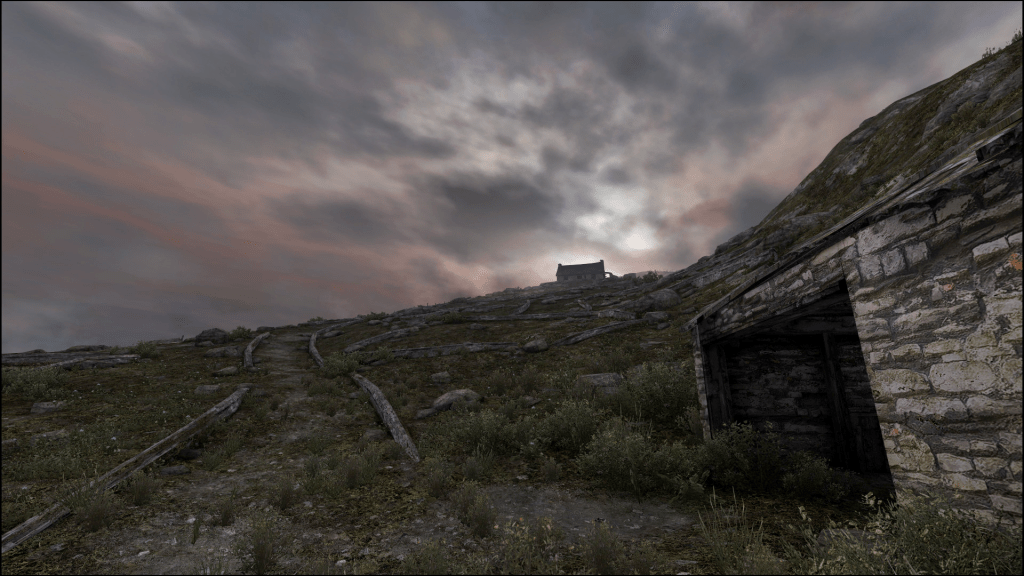
Most impressively, there are small randomizations that happen during the story-heavy moments that can lead one player to understand the game differently from another.
After finishing “Dear Esther,” and being completely gobsmacked, I asked my then-girlfriend-now-wife to give it a go on her own without my input. What I saw play out for her changed how I saw the narrative substantially. The outline of the story remained the same, but enough of the details swap around to alter things fairly profoundly.
Seeing that happen without any real indication from the game itself really knocked me on my ass. “Dear Esther” wants you to engage with it — meet it half way. That was my inflection point for video games. All of a sudden, games were more exciting for me.
Eventually, the whole game was remade again, and put out on consoles and mobile. Regardless of what you play it on, I am begging that you give it a go. It might just reframe all of video games for you.
“Dear Esther: Landmark Edition” is available on PC, PlayStation, and Xbox.
Image credit: “Dear Esther,” The Chinese Room


 Video Game Town
One response to “Grant’s Gems: Walk Like A Man”
[…] On August 18, 2025 By Grant Brunner Grant’s Gems: Walk Like A Man […]
LikeLike