
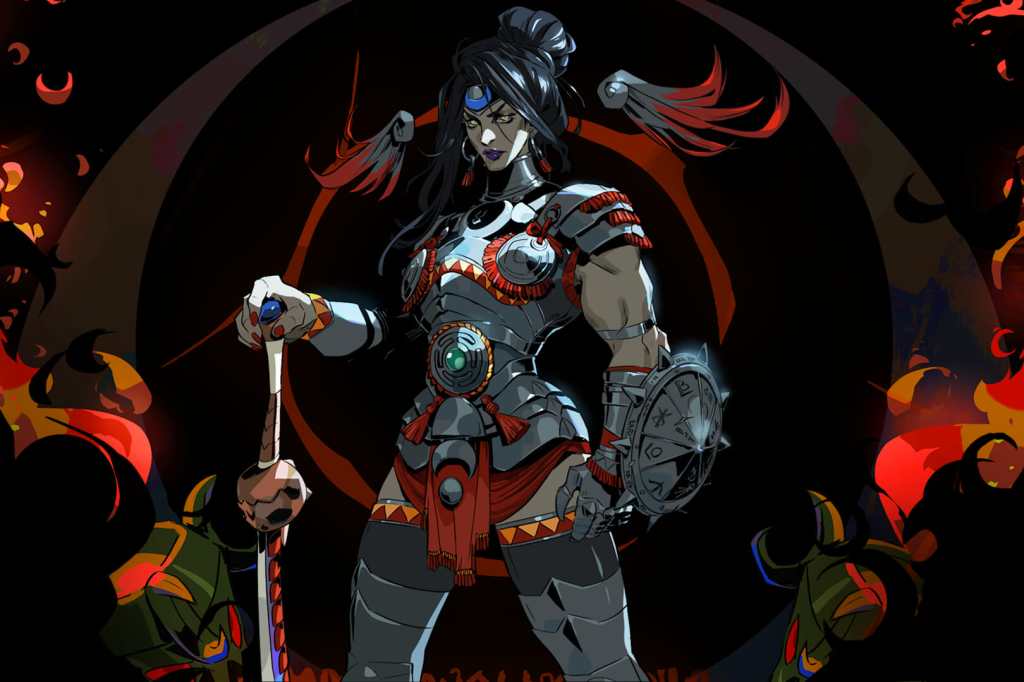
This is not a full review of the 1.0 release of “Hades II,” which is out this week, and that’s because I have a related rant I need to go on instead. But also it would take a lifetime to fully complete and see/do everything this game has to offer. Why, you might ask? Well, it’s two full games in one: Two paths, two campaigns, double the bosses, and therefore double the fun.
Over the course of many hours, my Steam Deck and I have entered Tartarus, Ephyra, Erebus, and Oceanus. Many, many times over. You know, because of all of the dying.
Crushingly, I don’t think the game is quite as good as the initial outing. Despite being twice the game, with double the horniness, I found that Mel is not quite the protagonist that Zag was. Her weapons and powers are less fun, the difficulty is ramped up, there’s an emphasis on magic that requires standing in place while holding a button to charge up moves, and that lends itself to being a much more challenging experience.
Harder to be good at too, which is a shame because being good leads to progressing at a decent clip. On the flip side, being bad leads to halted runs, and not nearly enough resources to upgrade things that lead to more cool stuff to play with. But at least the “Hades” games only have one optional room where you literally need to be perfect. If you don’t get whacked, you’ll get a nice reward. But going hitless and being perfect is not at the core of the “Hades” gameplay loop.
But the past fifteen years of roguelikes? It’s all about perfection and the constant need to never get hit. Not once.
That’s my biggest problem with the genre, and developers just keep bringing it back without really questioning if it should exist in the first place. Too many good roguelikes require the player to avoid getting hit entirely, and they lock too many power-ups and extras behind keeping a perfect run. In already difficult games, this seems overly harsh, and they do their damnedest to make you take at least one hit while dangling this crucial component behind a skill wall. I think that’s infuriating game design.
In “Returnal,” your adrenaline meter is tied to being hitless. Your health pickups could expand your hit points, but if you’re one pixel short of a full bar, you cant upgrade your health at all. In “Enter the Gungeon,” you get more treasures and guns for going untouched in boss battles. Even in my favorite rogue like, “The Binding of Isaac,” your devil and angel rooms are tied to not taking red heart damage during the boss fight.
Heck, even the “Legend of Zelda” games have the master sword get worse if you don’t have full health. You can’t shoot the cool projectile which makes the sword a lot less appealing in my eyes.
Not even “Dark Souls” gatekeeps players like that, and that’s saying something because those games love nothing more than to troll you at every turn. You can beat every soulslike with only a sliver of health, and the only people expected to never get touched by an enemy are speedrunners.
The worst, by far, is “Exit the Gungeon” which has a giant counter in the top right for how many enemies you’ve killed without losing any armor or health. That’s nerve-wracking! I’m not that good; just let me play the game without chastising or mocking me about how good I am, it’s beyond preposterous how so many entries in this genre rely on this gimmick.
The two “Hades” games do it in a way that I appreciate because the hitless challenge is just that: a challenge. It’s not a requirement for competent gameplay. It’s an optional room with a good-but-not-essential reward, and you don’t feel like shit for screwing it up. The higher the heat, the more of them you can try, but there isn’t any obligation.
I would argue in order to truly master “The Binding of Isaac” or “Returnal,” or even play them competently, the standard is set high to regularly progress through them too often and too early. You really have to get good at these hard-as-nails games for boss items and a better active reload. That’s a real bummer for me because these games are sensational otherwise.
In fairness to “Isaac,” you have soul hearts to protect your red hearts, so you have a fighting chance to make it to the devil and angel rooms. But when you miss out, it feels miserable because those rooms have the most powerful items, and you can quickly lose momentum in your run if you’re missing out. You can occasionally find other ways into those rooms, or methods to obtain those items, but only through luck — not skill.
And in “Dead Cells,” there is another door for speed running that I often go into, so I can get the same rewards without having to kill 60 dudes in a row without being touched. However, “Returnal” doesn’t have any of the same alternates, so that hurts the overall experience.
None of those games would be improved by having untouchable moments, and they all improve by having more options for more people — especially accessibility features. I think the genre has a skill cap requirement — a perfect example of a negative feedback loop that punishes bad players, and only rewards excellent players.
Are these games doing enough to teach us how to be better to avoid being hit? Do these games just expect us to get better at it on our own? Or can they include more difficulty sliders and accessibility options? With both “Hades” games, you get the singular “God Mode” which just ramps up the assistance the more you die. It’s a neat idea, but not one I’m particularly fond of. But at the end of the day, I’m glad these games lean more on narrative than manual dexterity and elite gamer skill precision.
Image Credit: “Hades II,” Supergiant Games



 Video Game Town