
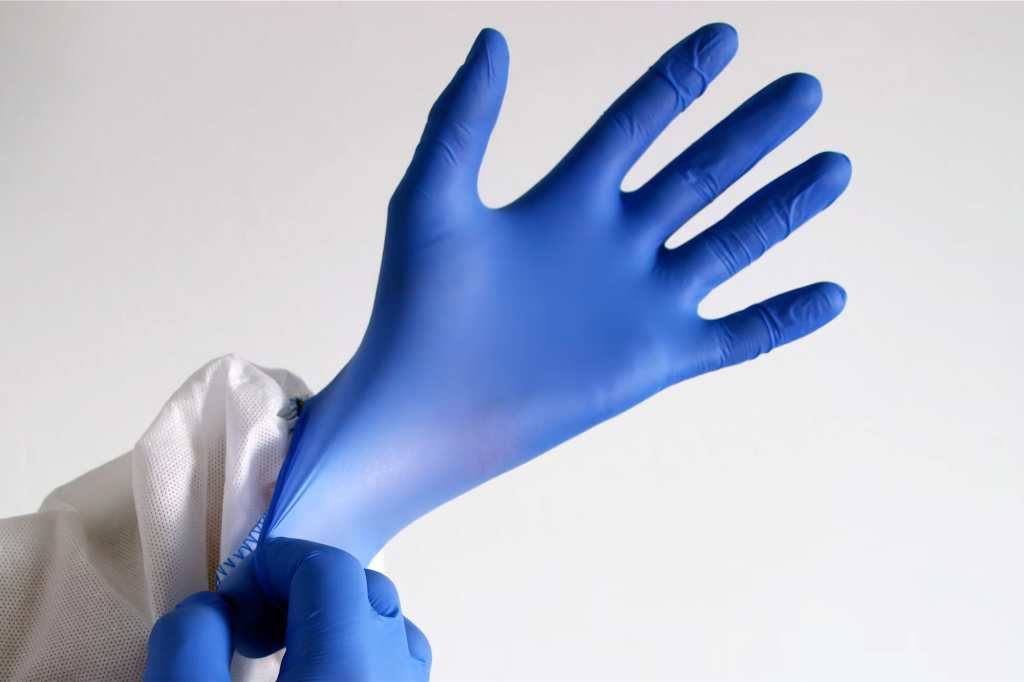
In this installment, we’re going to discuss how to preserve your “Pokémon” card collection. Protecting your collection is just as, if not more, important than getting that SIR in the first place.
It doesn’t matter how valuable a card is if you’re using it as a coaster for your coffee, right?
We’re going to go through five level of protection, and help you identify which works best for your collection.

Binders
Before we get into the nitty gritty of what protects the cards, let’s tackle binders. Whether or not to use a binder is fully up to you. If you just want to have a casual collection to look at, then any card can just go raw into a standard binder sleeves and into a binder.
However, if you’re interested in possibly selling some of your collection down the line, then you will want to adhere to the information in this article at the very least.
We recommend having at least one Master Set per card set in a binder. This is a nice way to manage and show off your collection. What’s that? A Master Set has at least one of every card from the set in a binder — excluding any secret rares.
This set can be easily stored in a standard standard three-ring binder you can find at basically any major retailer. There are also special binder sleeves to hold more heavy duty protection such as graded slabs and top loaders that are sold on Amazon and more collector-focused retailers.

Raw
Raw cards lack any protective sleeve or case. Think of a raw card as it being naked — it’s completely vulnerable to the elements. The only types of cards that should be raw are cheap bulk. Depending how much you really invest in the hobby, you will have hundreds if not thousands of bulk cards. Storing this excess bulk raw in a shoebox is completely fine.

Penny Sleeves
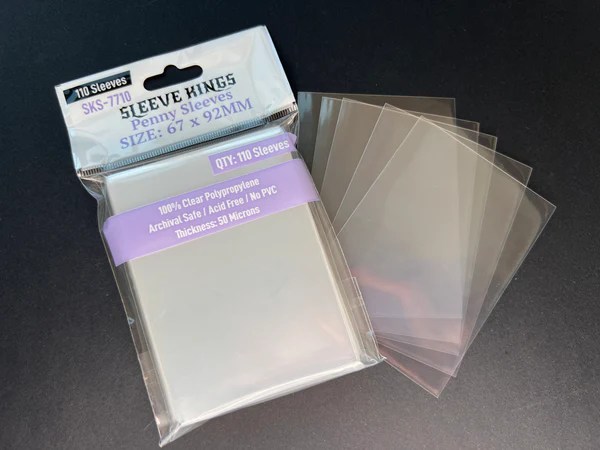
Penny sleeves are the first line of defense when protecting your cards — a must have. These thin plastic sleeves provide modest protection from oils or scratches.
Think of these sleeves as underwear. While underwear can provide some minor protection from the elements, it’s mostly there to prevent chaffing from regular pants.
We recommend all card rarities from standard holos to hyper rares be stored in penny sleeves. Even when inserting a standard holo or reverse holo into a standard binder, it should still be in a penny sleeve. Penny sleeves can be purchased from most major retailers and specialty shops.

Top Loaders
Top loaders are the main source of protection for your collection — also a must have. These are hard plastic sleeves that are much more rigid than penny sleeves. They can provide all the protection of a penny sleeve while also protecting your card against being bent or torn.
Think of these as jeans. If you’re going to wear jeans, you really should be wearing some underwear too, right? So make sure you put your card in a penny sleeve prior to putting them in a top loader. Why? The inner edge of the top loader can scratch your card if you neglect to use a penny sleeve.
All your secret rares (full arts, IRs, SIRs, and hyper rares) as well as any pokéball or masterball reverse holos should be stored in top loaders. Top loaders are, unsurprisingly, available at major retailers and specialty shops.


Grading Submission Sleeves
Grading submission sleeves are special sleeves that Professional Sports Authenticator, or PSA, requests your cards be stored in when you submit them for authentication and grading.
They are larger than a top loader, but more flimsy. However, these are meant to be a temporary sleeve in which they will be removed from and placed into a graded slab by the grading authority you have submitted the card to.
To continue the analogy from above, these are basically like long john underwear — more protective than briefs, but not as protective as jeans. Only cards that you are interested in grading should go in these.
Graded sleeves can be sold anywhere that top loaders are sold, but they can be a bit harder to find in person.
Please note: Check with your card grader of choice to see their submission requirements before purchasing the grading submission sleeves.

Slabs
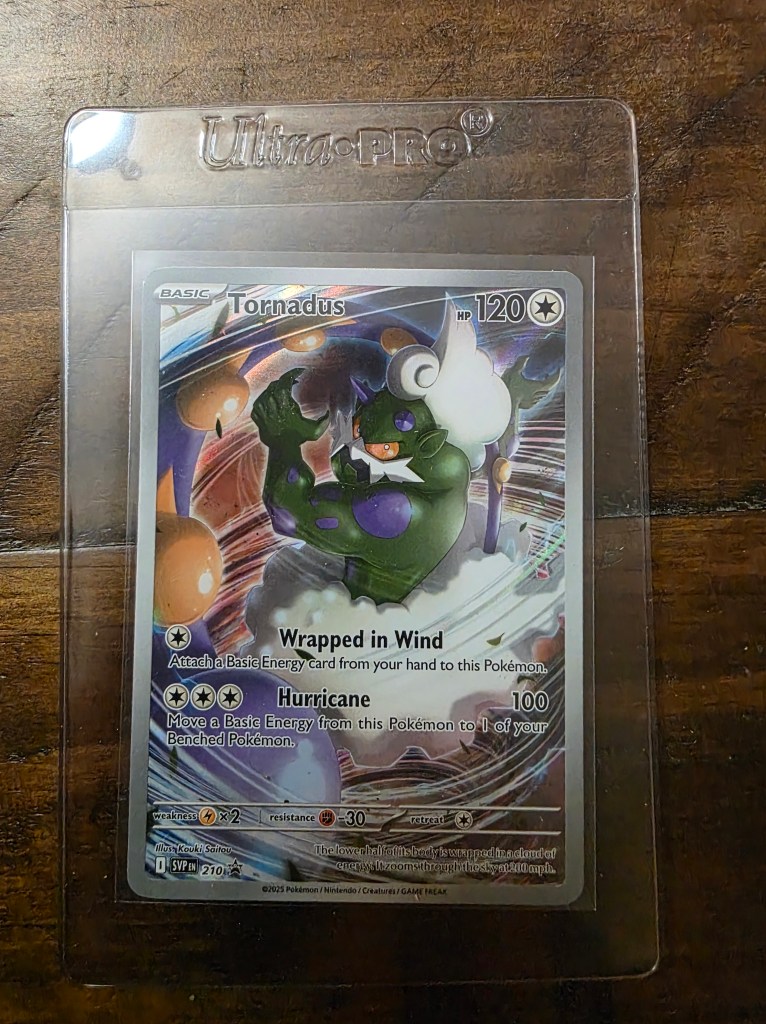
Slabs are the ultimate in card protection. They are your full plate armor to the top loaders jeans. You cannot purchase slabs — you can only get your card slabbed by submitting it for grading. Once your card has been graded, it will be returned to you in a slab with the details of the grading at the top.
Once it is sealed in a slab, it is protected forever. While it is possible to “crack” the slab to get your card out, we recommend against this because it can damage the card. Once the card is slabbed, it is meant to stay that way forever.
At the time of publication, grading costs roughly $20 per card depending on the grading body. For simplicity, we will refer to PSA grading.
The easiest way to submit to grading would be to find a local card shop who provides grading submission — they tend to charge roughly $25 per card in our experience, but you can check with your local Gamestop to see if they offer the service for cheaper.

We’ve covered the types, rarities, and preservation of your card, but we’re not done just yet. The final step in this journey is actually obtaining cards.
In the final installment, we will cover not only where to purchase cards, but also how much you should be paying so you don’t get ripped off.
Check out our other ‘Pokémon’ collection coverage
Image credit: maskmedicare




 Video Game Town
2 responses to “Gotta Collect Them All: Top Loader, It’s Super Effective”
Instructions unclear, now I’m wearing a chastity belt.
LikeLike
[…] Gotta Collect Them All: Leaving Pallet Town Gotta Collect Them All: No Glove, No Love […]
LikeLike