
This guest post is written by Katya Ryabova.
“Hell is Us” was released on all major platforms on September 4, 2025, and the internet barely paid attention. It might have been because another, um, highly anticipated game was unexpectedly released the same day. Or, it might have been the game’s trailers and whatever the buzz the game managed to generate pointing in the direction of it being yet another grimy, combat-heavy open-world exploration — yet another soulslike. You could practically hear the scoff.
The “Hollow Knight: Silksong” effect on September releases was, arguably, much less of a problem for “Hell is Us” than its soulslike label now. Why? Because “Hell is Us” is not a fucking soulslike, bro. Being described as such gives players the wrong idea of what to expect and what the game can offer — repelling players who don’t seek out combat challenges and attracting players who hadn’t signed up for puzzle-solving and exploration fetch quests.
I can see why it’s tempting to call “Hell is Us” a soulslike, especially if you do so having only seen the trailers. Superficially, it carries several hallmarks of a Souls game: A map-free world, a broody atmosphere, hordes of creepy enemies, a stamina bar, and a dodge-and-parry mechanic in combat.
It’s semi-open and has thoughtfully designed levels areas to be explored independently and backtracked to, with some shortcuts looping back to the beginning that you can unlock as you go. At the beginning, you’re in an unfamiliar, mysterious world. No markers, no explanation, and no weapon. The setup, from the setting to your character’s eventual cape and sword, is soulslike without a doubt. But is it enough?
It’s not.
Game Feel
For starters, let’s talk about the combat. Too many games with challenging combat and varied, strong bosses get the soulslike label today — unfairly or undeservedly. But even if we take just this oversimplified trait, and apply it to “Hell is Us,” it would fail the soulslike test.
The combat in the game is two-dimensional at best, and lackluster at worst, although you can tweak the difficulty to make it harder. (Yes, there are difficulty settings in the menu, which should be enough to turn Souls purists away.) At lower difficulties, it comes way too close to being an afterthought to matter much.
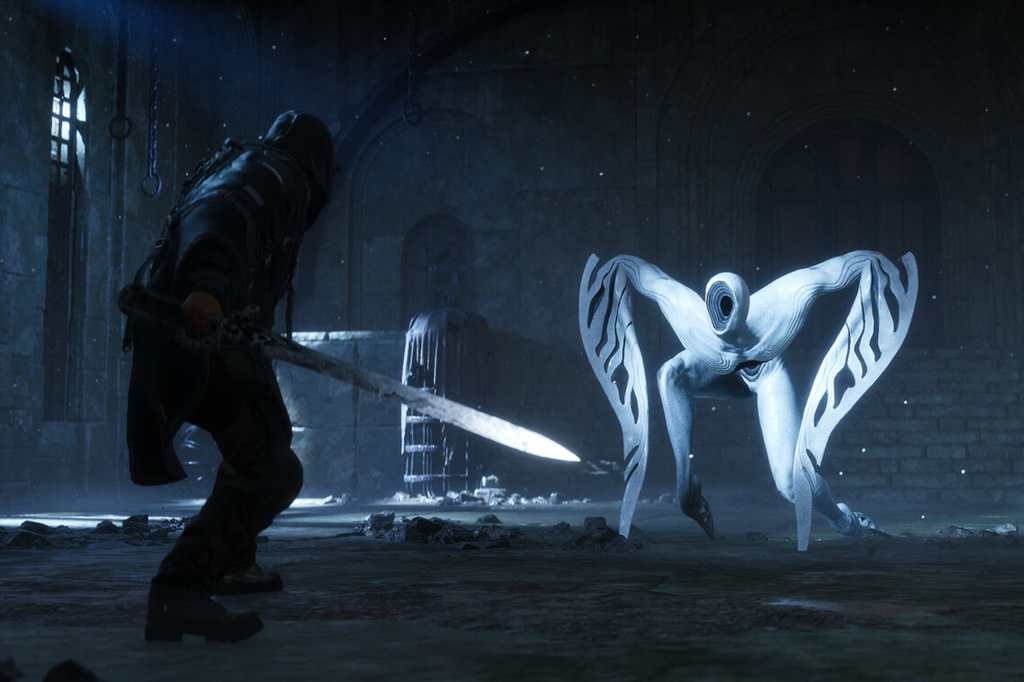
The enemy variety is nil since you fight the same three variations of the creepy foe that gets a longer health bar the further in the game you progress. There are only a handful of boss fights closer to the end of the game, and even then, their design is more to test your patience rather than parrying prowess. By the very end, it’s more of the same, just bigger. Quite literally.
Back To Basics
There are no bonfires to recuperate your health and stamina. Save points are just that and nothing more. If you die, you don’t lose money or materials. No corpse runs either. You can sort of force a near-soulslike experience of currency loss by enabling the reset of materials gathered between your last checkpoint and death, but there is no way of getting it back in bulk, and no point in doing it besides just making the game more frustrating.
What about the mysterious world and the deep lore? Well, the lore building in “Hell is Us” is top-tier, but it’s not only abundant, but also abundantly clear — you get a very good idea of what’s going on in Hadea as you traverse its civil war-ravaged villages and landscapes. At no point, except for the very beginning, can you scratch your head and go, “Whaaaa?”
No map and no hand holding warning, while good marketing, was made into a bigger deal than it actually is.
You’re definitely forced to pay attention and find your own way — the way an old-school experience in “Dark Souls” would have you do. This part of “Hell is Us” is cool, actually, even if I found the warning at the beginning a bit self-righteous given how the game actually shakes out.
Everything, every little piece of information that’s main quest relevant, gets recorded in a datapad that you can access at any time. You don’t have to remember anything; it’s spelled out for you, forever. Pathfinding might be a challenge, but areas are small enough that memorizing your way around happens through all the backtracking anyway. Side quests and fetch quests aren’t marked, but the datapad sorts relevant items into separate categories, so you don’t even need to puzzle out if a certain item is meant for a certain person. There is plenty of handholding in “Hell is Us” — it’s just hiding below the surface.
Hell
If you love Souls games and seek a similar challenge, you probably won’t find it in “Hell is Us.” If all you want is awesome, varied combat, the challenge of bosses and currency runbacks, and a cryptic story, I genuinely wish you wouldn’t waste your time and be disappointed with what is otherwise a really solid, well-made game.
If you’re soulslike-avoidant like me, but find the world of “Hell is Us” intriguing in other ways, don’t be intimidated by the label, and give it a go. Games can be many things and blend genres, and “Hell is Us” undoubtedly does, too. But it’s not a soulslike. Hell is other people who labelled it as such.
Image credit: “Hell is Us,” Rogue Factor


 Video Game Town