
This guest post is written by Jack Thomas Lawson.
I want to clarify something before we begin: I did not start this as a coping exercise — I started it as a fun little thought experiment. The kind where you spend twenty minutes on eBay nosing around, feel briefly wistful, and then close the tab and go on with your life. That’s not what happened. What happened instead is that I spent three evenings building a spreadsheet so upsetting that I had to take a walk after finishing it, and I don’t walk voluntarily.
The premise is simple. Somewhere in my mid twenties, through a combination of moving apartments, selling things to fund worse decisions, and general youthful idiocy. I shed most of my childhood game collection. The cartridges went. The discs went. The box for my N64, which, it should be noted, I kept for literally no reason until 2019 and then threw away, Also went. What I want to know is. If I tried to buy all of it back today, in 2026, what would that actually cost? Not a rough estimate. Not a vibe. An actual number, with receipts.
The answer is: A lot. The answer is: More than I paid for a used car in 2018. The answer is: This is your fault, specifically yours, for deciding that old games are investments now, and I’d like you to think about what you’ve done.
Nintendo 64
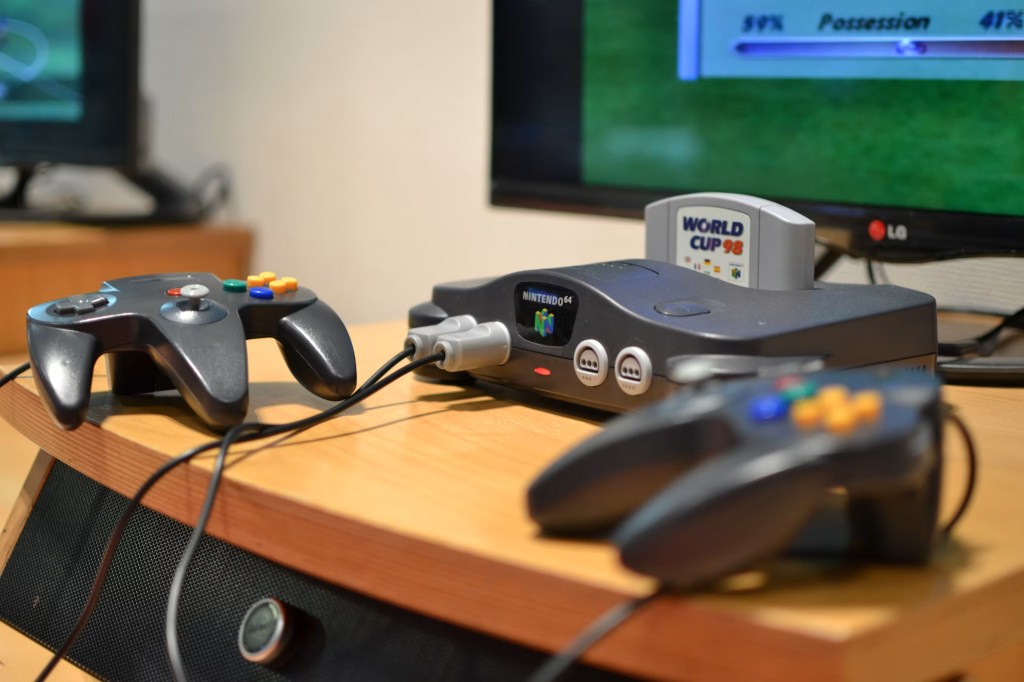
Let’s start with the N64, because the N64 is where the betrayal begins. I had about fifteen games for that console. Standard stuff: your Zelda games, Mario games, etc. The games I remember most vividly. The games I would describe, without hesitation, as formative.
Here’s what those games cost now, cart-only, based on eBay sold listings from the past thirty days:
| GAME | WHAT MOM PAID (EST) | CART ONLY (2026) |
| Ocarina of Time | $60 | $58 |
| Majora’s Mask | $60 | $72 |
| Super Mario 64 | $60 | $46 |
| Banjo-Kazooie | $55 | $55 |
| Banjo-Tooie | $55 | $65 |
| GoldenEye 007 | $55 | $38 |
| Mario Kart 64 | $55 | $44 |
| Star Fox 64 | $55 | $34 |
| Donkey Kong 64 | $60 | $48 |
| WWF No Mercy | $50 | $55 |
| Pokémon Stadium | $50 | $36 |
| Perfect Dark | $55 | $29 |
| Conker’s Bad Fur Day | $55 | $248 |
| Paper Mario | $55 | $78 |
| N64 Subtotal | $906 |
Prices are based on eBay (sold listings), cart only.
“Conker’s Bad Fur Day” is $248. “Conker,” the game about a hungover squirrel that you had to convince your mom to buy you. Is currently priced between a car tire and a weekend away. I need you to sit with that “Conker” number for a moment. $248. For a cart. No box, no manual, no nothing… just the grey plastic rectangle that you shoved into the console at 9 PM on a school night and pulled out at 2 AM having achieved absolutely nothing. My mother paid fifty five dollars for that game in 2001 and at the time she acted like she bought me a boat. In twenty five years, it has appreciated 351 percent.
My pension has not done that. Nothing I have done has done that. The squirrel wins.
PlayStation 2
Moving on to the PS2. Which is where things get philosophically complicated. Because here’s the thing about the PS2. It had an enormous library. When I say I had PS2 games, I mean I had a lot of PS2 games. The kind of accumulation that happens over six or seven years of birthdays and Christmases and summer jobs and trading with friends. Most of those games, if you look them up today, are worth between four and twelve dollars. Sports games. Licensed games. The copy of “ATV Off Road Fury” that came in the box. Nobody wants them. They have not appreciated. They are culturally inert and will remain so.
But then you get to the ones that have. And the ones that have done it in spectacular fashion. “Rule of Rose” $400+, loose. “Kuon” $250 minimum. That’s if you can find one. “Haunting Ground” sits around $200. These are games I either never owned or, in one case, owned and traded at GameStop for store credit I spent on something I cannot remember. The economics of this hobby have tilted entirely in favor of the person who held onto everything, which was not me, which was almost never any of us.
My PS2 collection, reconstructed conservatively — the stuff I actually remember having, none of the horror game outliers — comes to around
$620. Which sounds manageable until you remember that in 2003, these were $20 pre-owned games and birthday presents that cost my family an aggregate of maybe $180 total.
Nintendo Gamecube
The Gamecube is the one that genuinely hurts. Not because the prices
are the highest. Though some of them are, but because the Gamecube is the console everyone decided, collectively and retroactively, was actually great all along. Which it was! But nobody said so at the time! At the time we called it a purple lunchbox and bought PS2s instead. And now we’re paying for that cultural cowardice with our wallets.
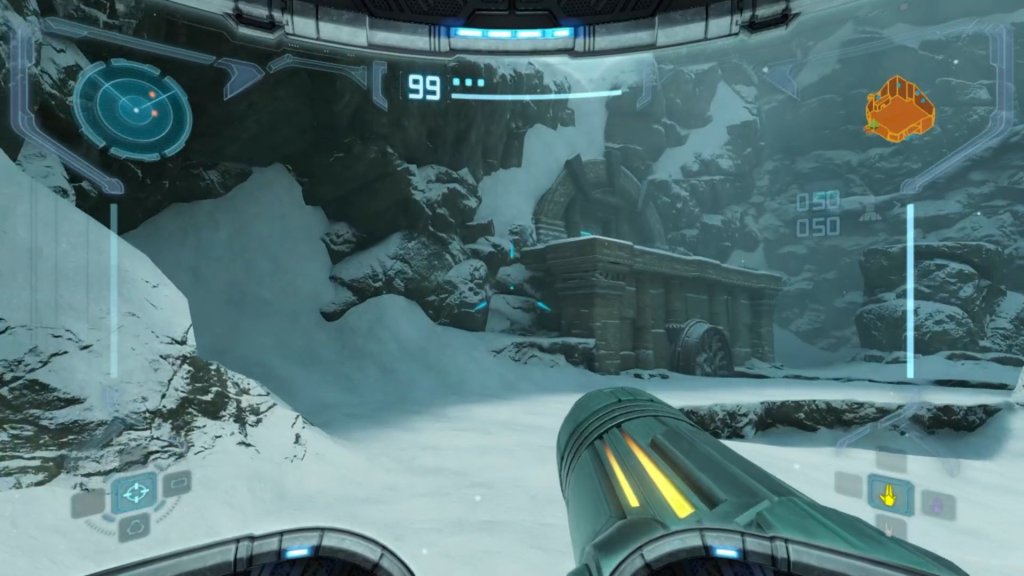
“Metroid Prime” is $55 loose. “Wind Waker” is $68. “Pikmin 2” is $95. “Luigi’s Mansion” is $62. And then, sitting at the top like a monument to our collective failure of appreciation, “Chibi-Robo,” which I owned, which I have vague memories of playing, and which currently sells for $120 disc only because, apparently, everyone else also vaguely remembers it and has decided that it qualifies as a collectible. The total of my approximate collection: $740. “The games aren’t going anywhere. They’re just going somewhere most of us can’t afford.”
Grand total, if I wanted it all back. Roughly $2,430. And that’s cart or disc only. That’s no boxes. That’s no manuals. That’s not the foam inserts or the little Nintendo Power inserts or the scratch and sniff stickers that came with some of the N64 games. If I wanted everything complete in box. The way I actually had it, the way the eleven year old version of me had it because he had nowhere else to put things and the concept of resale value had not yet colonized his brain, we would be somewhere north of $6,000. Which I would like to point out is a reasonable used car. A very good holiday, or four months of groceries depending on where you live.
I’ve been sitting with this number for a week now and I keep arriving at the same question. Which isn’t really about money… Do I want the games, or do I want to be the person who had them? Because those are different things, and I suspect the market has been very clever about
making us confuse them. The games still exist. You can emulate most
of them nearly for free. You can buy Nintendo’s own re releases for twenty dollars. You can, in many cases, simply play the thing without
owning a physical copy of it. The way you can listen to music without
owning a record.
But a digital copy of “Banjo-Kazooie” does not sit on a shelf. It does not have your initials scratched into the back of the cartridge from when your mum made you label everything. It does not have the save file with your original username on it. Mine was “COOL1,” a choice I stand by, or the three stars you got in every category before you lost interest and went outside.
The physical object is not the game. The physical object is evidence that you were there. Maybe that’s what we’re actually buying. Not the game. Not even the nostalgia exactly. The proof. The artifact. The little plastic rectangle that says. This happened, I was there, I was that kid, that kid existed. Which, as explanations for spending $248 on a game about a drunk squirrel go, is probably the most honest one I’ve got.
I closed the spreadsheet. I didn’t buy anything. I probably won’t, but I did find my old memory card in a box under my desk last month, and I wiped the dust off it. I didn’t throw it away, so who knows.
Image Credit: Pat Moin
 Video Game Town
One response to “What Would It Cost To Reassemble My Childhood Game Collection In 2026?”
A very true reflection of simple things in a child’s life like games that we grown ups take for granted that with time and technology simply becomes absolute.
This article really clarified my opinion of what the games were worth to the kids then .
LikeLike