
This guest post is written by Joseph Wales.
I’ve been a Dungeon Master for twenty years. That’s a weird thing to admit. It feels like saying I’ve been a professional daydreamer, but here we are.
For two decades, I’ve sat behind a screen (sometimes a real cardboard one, sometimes just my laptop) and guided groups of friends through imaginary forests, collapsing mines, and dungeons that smelled like wet moss and bad decisions. I’ve watched players argue for twenty minutes whether to open a door. I’ve seen a rogue try to steal a dragon’s tooth while the dragon was still using it. I’ve had a paladin cry over a fictional goblin child.
And somewhere along the way, I started noticing something strange. The same instincts that made me a half‑decent Dungeon Master were the same ones that made me love certain video games and despise others.
Balance is a lie, but it’s a useful lie
In “D&D,” balance is a myth. You can throw a perfectly calibrated encounter at your party, and they’ll still find a way to die to a stray cat. Or they’ll one‑shot your big bad evil guy with a clever spell you forgot existed. The game isn’t about perfect numbers — it’s about feeling like the challenge was real, even if you fudged a dice roll or two.
Video games do the same thing. Think about “Elden Ring.” That game is brutally hard, but not because the numbers are “fair.” It’s hard because the designers understand something DMs learn early: Players remember the close calls, the last‑second heal, the moment they survived by a hair. They don’t remember the fights that were exactly on the difficulty curve.
I’ve run sessions where I quietly lowered a monster’s HP mid‑fight because I saw my players getting frustrated. I’ve also quietly raised it when they were steamrolling everything. That’s not cheating. That’s pacing. Good video games do the same thing with adaptive difficulty, enemy placement, and subtle rubber‑banding. You’re not supposed to notice. You’re just supposed to feel like a hero.
Failure is more fun than success (sometimes)
As a DM, my favorite moments aren’t when my players win. They’re when they fail spectacularly, and then have to deal with the consequences. The fighter who charges in alone and gets knocked unconscious. The wizard who fireballs the hostage by accident. The rogue who trips the alarm and suddenly the whole dungeon is after them.
Those moments create stories. They become the “remember when” jokes years later.
Video games that understand this are gold. “Disco Elysium” basically has no “game over” screen. You fail a check, and the story just gets weirder and better. “The Sims” is hilarious because your idiot Sim can burn down the kitchen trying to make toast. Even “Breath of the Wild” thrives on “I tried to climb that cliff, ran out of stamina, fell, and now my sword broke.” That’s not a bug. That’s design.
Most modern games are terrified of letting you fail. Autosaves every two minutes. Hand‑holding tutorials. Invisible walls to keep you from wandering off. A good DM knows that failure isn’t the end of the game — it’s the beginning of the interesting part.
The best moments are the ones you didn’t plan
I’ve learned to never over‑prep. Because no matter how much lore I write or how many NPCs I invent, my players will latch onto the random fruit vendor I made up on the spot. They’ll adopt the goblin I meant as a throwaway joke. They’ll decide the haunted castle is actually a great place to open a bed and breakfast.
You can’t plan for that. You can only leave room for it.
Great video games do the same thing. “Minecraft” is essentially a giant improv session. “RimWorld” is famous for generating stories no designer could have scripted. Even “Skyrim’s” best moments are often glitches: A dragon flying backwards, a giant launching you into space, a guard’s arrow that somehow follows you across the map.
Those moments aren’t mistakes. They’re emergent storytelling. And they happen when designers stop trying to control everything and let the player’s chaos bounce off the game’s systems. As a DM, I’ve learned to love the chaos. I don’t write stories for my players anymore. I write situations. Then I see what they do. Then I react. That’s the game.
Reading the room
The most important skill in “D&D” isn’t knowing the rules. It’s reading the room. When are the players getting bored? Who hasn’t had a turn in the spotlight? Is that joke landing or should I move on? Video game designers can’t see their players’ faces, but they can build tools to read the room anyway. Difficulty spikes. Pacing. A quiet moment after a boss fight. A puzzle that seems hard, but has a sneaky shortcut.
I think about the way “Hades” lets you pet the dog between runs. Or how “Stardew Valley” never rushes you. Or how “Portal” teaches you without a single line of tutorial text. That’s design empathy. It’s the same empathy I need when my players are stuck on a puzzle and I have to drop a hint without making them feel dumb. So what?
I don’t know if any of this makes me a good writer or a good game critic. I just know that twenty years behind a DM screen has taught me more about what makes a game work than any number of YouTube video essays. Game designers are just Dungeon Masters building their tables for millions of strangers instead of a handful of friends. The good ones know they’re not in control. They’re just setting the stage.
Now, if you’ll excuse me, I have to go prepare for a session. My players are about to enter a cursed bakery. I have no idea what they’re going to do. And that’s exactly the point.
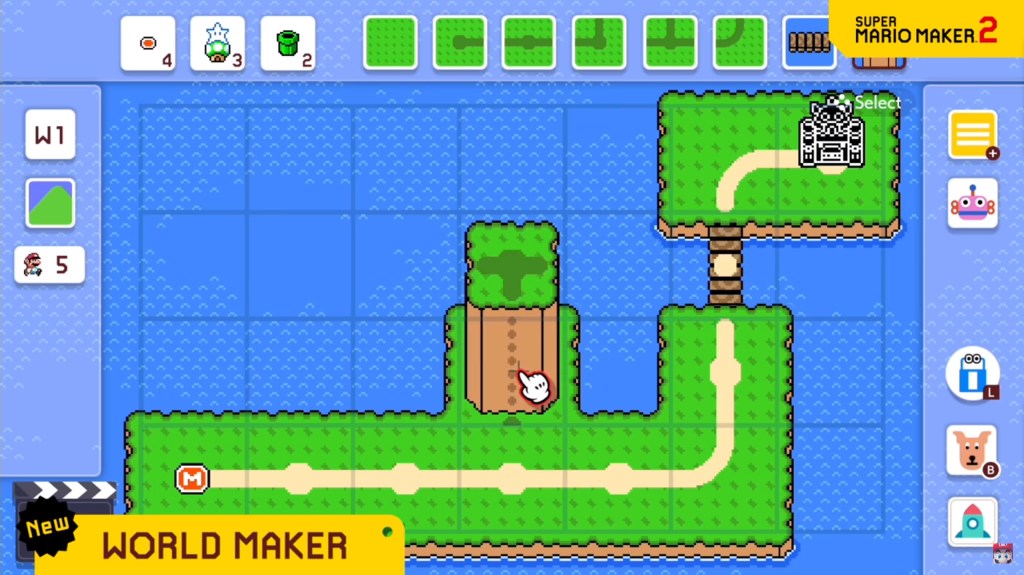
Image Credit: “Mario Maker 2”

 Video Game Town
One response to “The Dungeon Master’s Desktop: What 20 Years of Running ‘D&D’ Taught Me About Game Design”
[…] Shooter ‘Crisol: Theater of Idols’ Evokes ‘BioShock’ Soaked In Blood The Dungeon Master’s Desktop: What 20 Years of Running ‘D&D’ Taught Me About Game&… Ranking The 16 Best ‘Stranger Things’ Season 5 Moments ‘Young […]
LikeLike