
This guest post is written by Michaela El-Ters.
One of the greatest horrors humans have always faced is the fascination with, and fear of, the unknown. Our quest for knowledge and understanding has driven human evolution for thousands of years. Yet few genres capture the sensation of how terrifying the unknown is better than cosmic horror. While the term “cosmic horror” originates with H.P. Lovecraft’s works, its roots can be traced back to the stories that inspired Lovecraft himself, “The King in Yellow.”
Written by Robert W. Chambers in 1895, “The King in Yellow” is a collection of short stories ranging from supernatural to romance. Nearly all of the stories are connected by a fictitious play titled “The King in Yellow,” which is described as a forbidden, tantalizing drama that causes insanity in whoever reads it. It’s a fascinating, albeit unusual collection that explores people’s deepest desires and insecurities — and the horrors that come from within and beyond — with nuance and depth.
Perhaps it is for this reason that “The King in Yellow’s” stories continue to resonate even in the 21st Century, referenced in numerous books, table-top RPGs, television series, and more. “True Detective’s” first season famously brought the stories to the forefront of cultural awareness, incorporating the corruption and cult-like worship of The Yellow King into its narrative. Even recent video games — notably, “Signalis” and “Saros” — weave “The King in Yellow’s” horrors into their worldbuilding and gameplay to tell beautifully haunting stories of love and loss.
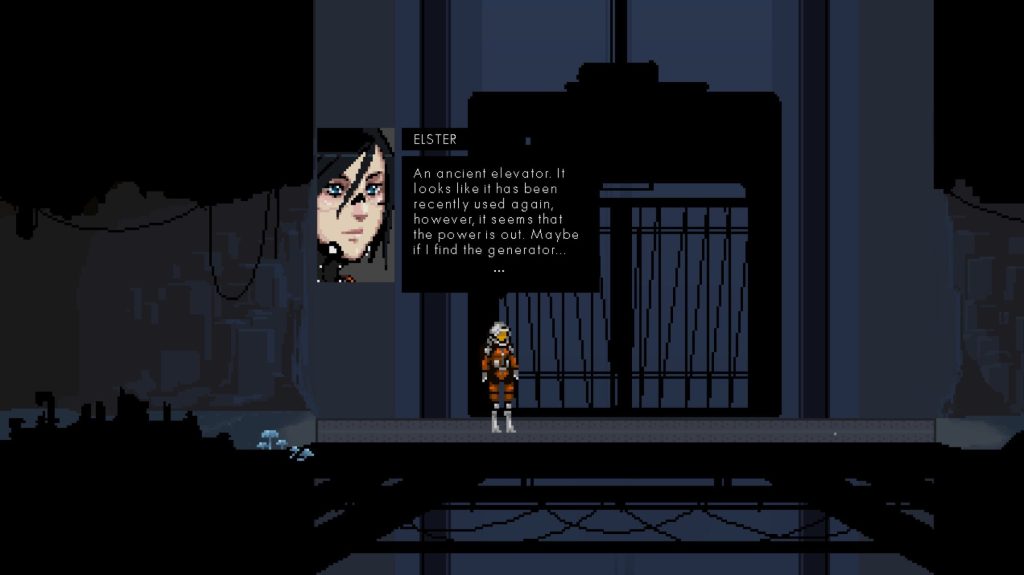
“Signalis” is a survival horror video game that follows a Replika unit called LSTR-512 (also known as “Elster”) on a mission to find Ariane, the person she loves most. Within the opening minutes of “Signalis,” after crash-landing on a snowy planet and exploring the abandoned station, the player finds and picks up the banned book, “The King in Yellow.” From there, Elster experiences strange visions of a shoreline with black spires rising in the sky, and even sees flashes of her robotic form decaying in the mirror. Other Replika units have gone insane after being corrupted by bioresonance, a mysterious and otherworldly phenomenon spreading among them like an illness.
The sci-fi, dystopian future of “Signalis” is influenced by the first story in “The King in Yellow,” “The Repairer of Reputations.” This short story explores an alternate timeline of strict immigration and naturalization laws, legalized suicide, and the psychological effects of reading the censored play, “The King in Yellow.” Though subtle, these details are all present in “Signalis” and actively shape its setting.
All of the character’s naming conventions (Ariane Yeong, Isolde Itou, etc.) follow the naturalization and immigration laws enforced in the alternate future presented in “The Repairer of Reputations.” In addition, when Elster and Ariane fail in their mission to find another planet suitable for colonization, the Eusan Nation sends instructions encouraging their suicides.
Despite the bleak undertones and dystopian future, “Signalis” is ultimately a beautifully gripping and tragic queer romance. Flashbacks and hand-written notes reveal Elster and Ariane’s forbidden, yet blossoming romance before their ship crash-landed under mysterious circumstances. The narrative in “Signalis” is entirely driven by Elster’s desire to reunite with her, no matter the cost, even if their ultimate reunion is bittersweet and deeply heartbreaking. “Signalis” tells a powerful queer love story against the backdrop of a unique, dystopian future flavored by the cosmic horror of “The King in Yellow.”
Where The King in Yellow is more subtly woven into “Signalis” and its worldbuilding, “Saros” openly wears its inspirations on its sleeve. “Saros” is a sci-fi action game that sees Carcosa manifested as a dangerous, shape-shifting planet to be conquered and harvested in true “Alien” spirit. The story follows Arjun Devraj, an Enforcer employed by the Soltari Corporation.
He arrives alongside the Echelon IV crew in search of the missing colonists sent to colonize Carcosa and extract its resources. While searching for the colonists is his top priority, he is also driven by his personal mission to find his lost love, Nitiya. As the stranded crew starts to lose their sanity to the effects of being on Carcosa, Arjun is in a race against time to find who he holds dear.
Cassilda’s song describing the lost Carcosa, with its black spires and shorelines, is brought to life in stunning clarity in “Saros.” “The King in Yellow” shapes and informs “Saros’” visual identity, best seen in the use of the color yellow, though it isn’t for the obvious reason you may expect. Interestingly, yellow became synonymous with indulgence, decadence, greed, and obsession during the Decadent Movement, also known as the “Yellow Nineties,” when “The King in Yellow” was written. It’s an important piece of cultural context that greatly enhances “Saros’” visual identity, and draws player’s attention to everything from the yellow window curtains and bed sheets, to the golden accents of the bosses fought throughout Carcosa.
Not only are “Saros’” visuals and themes heavily influenced by Chambers’ stories, but “The King in Yellow” also serves as the vehicle for Arjun’s character development. In particular, the short story titled “The Yellow Sign” explores the psychological consequences of reading the forbidden play, and even emphasizes The Yellow King’s overwhelming power and control over the narrator:
“Now he [The Yellow King] was at the door, and the bolts rotted at his touch. Now he had entered…It was only when I felt him envelope me in his cold soft grasp that I cried out and struggled with deadly fury, but my hands were useless.”
Arjun’s behavior throughout “Saros” is not unlike The Yellow King claiming his targets. Arjun obsessively clings to his past with Nitiya. His determination to find her, at first admirable, quickly crosses a line from care and love to manipulation and control. His character arc is one of reconciliation as he comes to grips with their changed relationship and lets Nitiya go.
The contrast between Arjun’s “reunions” with Nitiya — one in which he happily reunites with the idea of her, and the other in which she rejects him — illustrates this shift. “Saros” masterfully blends reality with the fictional, cosmic influences of Carcosa and The Yellow King to tell a cautionary tale about the dangers of power, obsession, and greed.
As a forefather of cosmic horror and Lovecraftian mythology, “The King in Yellow” expertly taps into our fears and paranoia of what lies beyond and what we don’t know. Yet “Signalis” and “Saros” both leverage and subvert Chambers’ gripping, otherworldly stories to tell beautiful, haunting tales depicting the heights of love and the depths of loss. In that sense, it wouldn’t be a stretch to say that “The King in Yellow” and its impact on contemporary media will always endure.
Image Credit: “Signalis”


 Video Game Town