
This guest post is written by Andrew Nickerson.
Throughout gaming history, there’s been one longstanding truth: Anyone can make a lemon. The reasons for such are extensive, the most common being sloppy gameplay, poor graphics, bad writing, or a famed franchise getting milked one time too many (e.g. “Mega Man Soccer”). Whatever the reason, these games mostly either become the butt of countless rants or fade into obscurity — usually leaving their creators steamed and gamers wondering why they even bothered.
One such citrus orchard resident is a title most probably haven’t heard of. “Midwinter II: Flames of Freedom” was released on PC in 1991 (happy 35th!) by Microplay Software, and it had players portraying a secret agent aiming to stop an evil empire. Unfortunately, it completely flopped. The short list of reasons why including sloppy animation, awkward 3D graphics, and clumsy play, thus making it target practice for critics and audiences alike. In the end, it followed the fade away route; having been written off as an example of what not to do.
However, in hindsight, these judgments were all premature, because “Flames of Freedom” was at least twenty years ahead of its time. Its extensive depth, amazing combat potential, and the sheer foresight infused into it would make most modern developers blush.
Furthermore, if it was remastered on a modern console or (even better), made into an MMORPG, it could leave many current franchises in the dust. To better understand this, let’s take a closer look at this diamond in the rough, more specifically what made it so revolutionary and the impact it still has the potential to make.
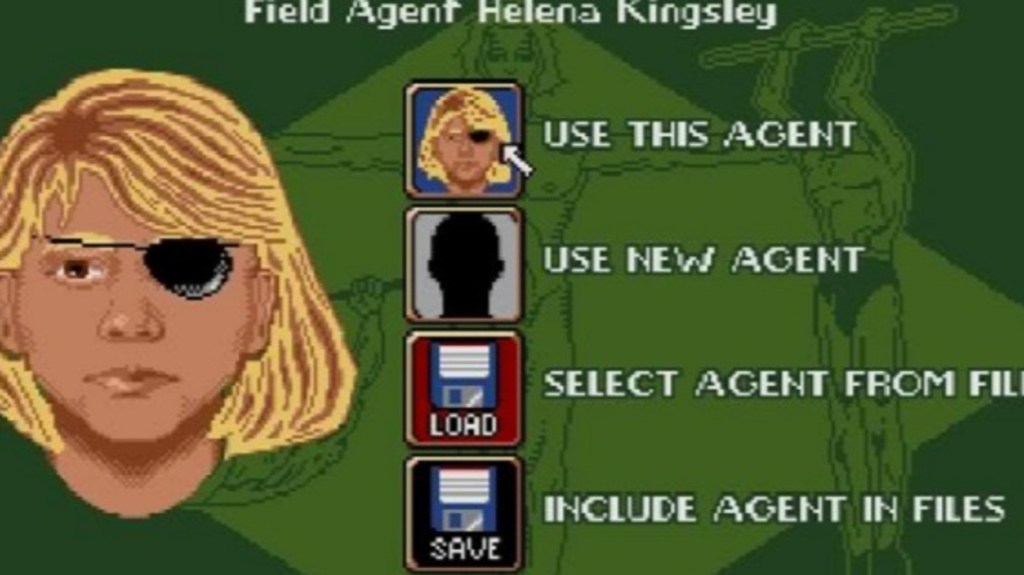
To begin, just starting the campaign was a huge departure from the norm. Virtually all games back then (and to some extent now) handed players a fully formed character and scenario, then said, “Have at it.” In this case, players built their character from the ground up, choosing their name, gender (revolutionary by itself for that era), and even a special skill they could employ on their mission. Options for the latter were all brilliantly thought out, ranging from Pleading and Sex Appeal (another big jump) to Bribery and Threats, a concept that many modern writers a while to catch onto.
Once that was done, you received your orders: the evil Empire is planning to send an armada of ships to invade your home island, but they must pass through a network of occupied islands to reach you—and their predicted route is conveniently provided ahead of time. That’s where another revolution came in: you’re to travel amongst these islands (choosing whichever you wanted, although time can lapse much more depending on your choice, another nice touch), liberate them, and thus force the armada to waste time/resources reconquering each locale.
Doing so will hopefully wear them down and allow you to gather further resources to destroy them. In essence, Microplay offered players an open world concept decades before most developers even tried. One further innovation of note: On the overhead screen, players could manually trigger the armada’s launch at any point if they wished (seriously, they actually did this).
Then there were the islands themselves, each of which had varying significance: Some were political machination sites, others crafted secret weapons, and so on. Each had its own unique geography, as well as separate liberation objectives, including recruiting potential backers like the emperor’s nephew, sabotaging different facilities like underwater factories, assassination, and freeing political prisoners like a pop singer jailed for singing about freedom. What’s more, how anyone did so was entirely their call: Assassinate someone with a knife or sniper rifle, blow up a facility with a tank or airplane… The only limits were in players’ imaginations.
Their character’s espionage specialty could often help achieve goals, particularly recruiting allies; the manual even hinted at which ones best applied to each island. On another note, the islands’ respective defenses differed based on their specialty. For example, an island specializing in propaganda wasn’t as well guarded as one containing political prisoners.
That brings up characters’ potential arsenal options… And they were insane. Players could use everything from grenade launchers to RPGs to submachine guns, not to mention drive literally any vehicle they came across. Moreover, each vehicle had its own unique controls (divided up in the manual into three categories, depending on whether players used a joystick, mouse, or keyboard), as well as its own weapons, speed, fuel capacity — the whole nine yards.
Combat was 100 percent amphibious: Characters could fight on foot, in a land-based vehicle, fly helicopters, travel in a mini-sub etc. There were even some really neat original craft, the most famous being the Flying Submarine, which could legit fly, go underwater, or travel across land.
From there came the espionage part of the game, which was where things really got intricate. People could meet different island residents, many of which could offer to help in any number of ways: They could provide transportation, weapons, shelter, or healing; they could take players on a secret journey to meet a potential target; in some cases, they’d willingly assassinate someone or sabotage a facility. However, Microplay took it a step further by offering the possibility that said residents might also betray players, thereby allowing their writers to add yet another unique dynamic: escaping from jail.
For that, they crafted an entire roster of guards, each with their own personality/weaknesses (some are more brutal than others), meaning players had to approach each one differently. They also offered players a list of escape options. They could bribe, attack, or seduce the guard (giving initial espionage specialty choices still more importance), although these could sometimes fail, leaving them stuck in jail for another day. Then again, they could also do nothing, provided they wanted to plan. After a set time (if they did nothing or repeated escape attempts failed), the player would automatically be rescued, but that’d be detrimental to the mission, thus ensuring maximum pressure to get it right.
This leads to the next unique dynamic. One of the most amazing items Microplay added touched on something most never encounter nowadays, let alone an early ’90s PC title: Fatigue. Sure enough, the writers went into intimate detail once again. When energy/health drops, performance flags, so players have still more options to consider. They could rest for 5 minutes to recover some energy, sleep an hour to recover still more, or rest overnight to really get back up to speed. Of course, they could choose to do nothing, but that would affect future performance, as well as make them more vulnerable in the field. More food for thought.
That brings up one final unique element: Building design. Most structures in the early ’90s tended to either be the same or, if different, get recycled (albeit in different colors) later on. In contrast, while this game reused buildings, they came in numerous types, each with its own specific characteristics, such as a side dome or angled roof. Furthermore, certain islands only had certain buildings, and some locations had a larger number of such, depending on its purpose. For example, one island was a zeppelin base, hence its numerous hangers, while another specialized in secret weapon R&D, so it was full of weapon labs and research facilities.
Looking back, it’s so hard to fathom that an early ’90s developer could come up with something so modern even if audiences, understandably, never saw its potential due to that era’s game tech. However, since remastering older titles is becoming more popular each year, maybe it’s time someone took a chance and dusted this one off. Who knows? It just might achieve its original purpose: Sparking a revolution.
Image Credit: “Midwinter II: Flames of Freedom”



 Video Game Town