
This guest post is written by David Davis.
Have you ever heard the concept of a “watercooler show?” The concept goes back to a pre-Internet world where you might be following a TV show on a weekly schedule that is so compelling, with such fascinating mysteries, that co-workers would discuss it at work over the watercooler the following day (For some of our readers: water coolers were like Discord, but in real life, with paper cups).
In the pre-Internet world, these shows became an early form of social gaming, driving conversation. You could probably do a workplace socialization study based on these types of shows and their impact. But in our modern, Internet-driven world, so much of that socialization has displaced into the ephemeral pockets of subreddits, social media trends, and short-form video content that the landscape of creating compelling, discussion-worthy television has evolved significantly.
Right now, decentralized discussion has pushed showrunners and writing staff to intensify the gamification generated through discussion, easter eggs, and supplemental materials to such a degree that pulling in fan investment almost becomes the marker of the show’s success. But is this model of writing and fan-investment even sustainable or worth it?
Beginning at the End
It feels appropriate to begin with one of the last watercooler shows, which was also there as the internet was really beginning to emerge. “Twin Peaks,” that 30-years-too-early internet darling show by David Lynch and Mark Frost, was a soapish parody of watercooler shows that emerged as Usenet groups, an early form of internet bulletin board, sprouted up for just about any interest imaginable. The show, then, would have been perfectly tailored for our algorithmic world of today, and this is especially evident given the ubiquity of “Twin Peaks” memes and the present fandom around lead actor Kyle MacLachlan.
While network-mandated resolution of the central mystery of who killed Laura Palmer may have rubbed viewers the wrong way, the larger impression is that the fan discussion was largely organic. Lynch and Frost would do their interviews and tease things out, largely speaking. Yet, the fan community around the show was organic and made their discussion spaces without the showrunners intruding on them or directly contacting them.
It came down to pretty good writing, natural mystery teases, and water coolers and Usenet groups, and it worked. But what happens when showrunners and fandom begin interfacing directly? We suddenly have the weight of expectations. Do barriers need to be maintained?
The Mystery Box
By the time J.J. Abrams hit the scene with the one-two punches of “Alias” and “Lost,” the early internet had expanded into the early modern social media, subreddits, and Facebook. And these shows were big online, with “Lost” and its ever-expanding island mystery generating a ton of theory that the writers would respond to and reference in kind, creating a recursive loop of creator and fandom influence.
Now, rather than the gamified mystery of television handled locally, mostly in-person, we see a precipitous expansion in scale, as viewers around the world can weigh in on series as they air. Shows with mysteries and fan-teasing gamification spread online, drawing people in. We transition from views to gamers, as clues give purpose, a direction, and a need to figure out the show as it airs. All the while, creators are latching onto what the fans respond to. The snake begins to eat its own tail, and we’re not even that far into this history.
This gamification aligned well with the concept of the mystery box that drove most of the productions most remembered by JJ Abrams’ Bad Robot Productions. The ARG (Alternate Reality Game) is the greatest extent of this gamification of mystery-teasing. Most shows are content to leave these teasers within the show itself. However, things can and have gone beyond the confines of the TV and into the real world, or across complicated community-driven games on websites. And when they don’t really catch on or mean much, it seems almost pointless.
How many of us remember Slusho!, really?
Fan Expectations
The delightful thing about creators interacting with fandom in online spaces through gamification is that the enthusiasm can pull people into the fandom and garner social buzz. Puzzles, scavenger hunts, “lore videos” on YouTube, it all adds to an immersion that can really boost the profile of a project. It’s no longer passive entertainment but a collaborative game. But there are a couple of broader risks to be concerned about.
First is the setting of unrealistic expectations. The problem with embracing fan theory is that it can get carried away and result in backlash when that outcome is not met. There are two great examples of this that hail from genre TV: “Wandavision” and “Game of Thrones.” For a long time, the internet was fully convinced Marvel’s Mephisto would have some hand to play in what “Wandavision” was leading toward.
Never happened, but the showrunners did not redirect viewers from this notion because it drove buzz until the show finished. While “Game of Thrones” showrunners D.B. Weiss and David Benioff claimed to ignore fan theories, other people in the loop, from scripting to marketing, were aware of what fans were saying and would play to those expectations.
A second risk is making the game vital to the show. Creating important information and distributing it through means outside of the show itself generates more fan involvement. However, it can also isolate viewers – not every person wants homework associated with their show after a long day. “Severance” on Apple TV+ is a major hit, but not every fan wants to find the time to read in-universe documents that reveal plot points and information about the nature of Lumon, Inc. But by pursuing these routes, the show plays to gamers and leaves viewers behind, and something is lost.
A Better Path?
The weight of fan expectations can have a major effect on how a show is remembered. It may not be fair, but it is a risk that comes with gamifying a show, especially when leaning into elements that create speculation and involvement. By creating those opportunities for expectations, inevitably, some members of the fandom will become convinced of something through clues left by the writers, whether those interpretations are intended or not.
The approach taken by Katie Dippold and the writers of Apple TV+’s “Widow’s Bay” might illustrate the best approach to this kind of gamification today. In an NPR interview with Dippold, they spoke of the writer’s room for the show, indicating the makeup of the room was a combination of “mythology” folks and classic TV writers. The gamification and balance between the lore and the traditional writers proved fun and fertile for storytelling.
But what is notable here is that Dippold and her staff have been keeping these things in the writer’s room and not pushing them to subreddits, ARGs, or supplemental material, and personally, from following the subreddit and theorizing, things have yet to go off the rails, and expectations are in check.
The larger takeaway here is that having the mystery and clues is great and all, but managing fan expectations by limiting direct address to them might be essential. We’ve yet to see how “Widow’s Bay” will be treated in the long term, but as someone who has been down this path before, I am optimistic about the one-sidedness of their game.
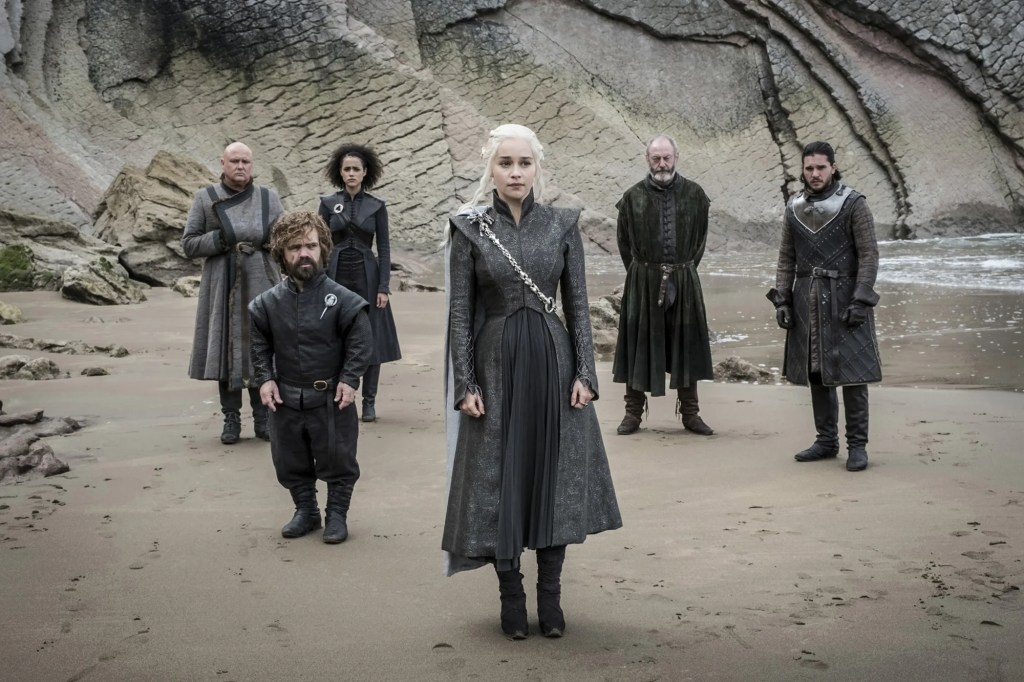
Image Credit: “Game of Thrones,” HBO



 Video Game Town
6 responses to “From The Water Cooler To Subreddits: The Gamification Of Genre TV”
[…] also had at article go up at Video Game Town titled “From The Water Cooler To Subreddits: The Gamification Of Genre TV.” It was fun to write and I would like some more opportunities like this, so be sure to check it out. […]
LikeLike
Yes, The typology of genre of metaphysic definition, and the prosumerism beneath it. Such is the mental catagorization of new formation of thought.
LikeLike
I’m iffy on side content. I don’t want any shows to get as convoluted as games like Nier for example. I think some extras are fun, but it’s easy to take it too far.
The worst is when shows actively try to subvert expectations just for the shock value. The way the Game of Thrones ending was filmed definitely suffered from this. One of the worst examples I’m aware of though, is How I Met Your Mother. I didn’t watch it when it was airing, but my wife showed it to me a while back. I thought the last season was really well done, right up to the end, where it felt like the writers just undid everything purely out of spite. It was so bad
LikeLike
It’s rewarding for megafans, but I think the work should stand on its own without supplementary material. After all, once the ARG is done, you’re left to read about the aftermath years later. It feels disconnected.
LikeLike
I think as far as expanded universe content for shows go, how Babylon 5 executed its spinoff content and novels and the like, was one of the better ways to go about it. Studios and showrunners really shouldnt be playing to fan expectations, and instead they should have a coherent narrative that (ideally) is internally consistent. I also think that any executive meddling should be (in an ideal world) limited to vetos on things that would get a network in hot water with regulators, or otherwise be a risk to funding or safety. Beyond that, showrunners should have the freedom to not only let their artistic vision exist without compromise from executives or fans, but if a network drops a show, they should be required to not only allow another network or backer to pick it up if they want, but they shouldnt be able to control the streaming rights for the already completed episodes on the normal scale of how long that lasts- it should revert to the showrunner or current backer after 5 years or so.
LikeLike
Personally I prefer that the writers tell their own story. Hint painting at future outcomes, red herrings, and easter eggs are all fun and are great at promoting conversation. But basing the story on what fans want can really muddle it up and make the story make less sense. As for extra material that expands the lore of the universe, but not included in the show i am not a fan. I barely have enough time to watch the show let alone read about it.
LikeLike