
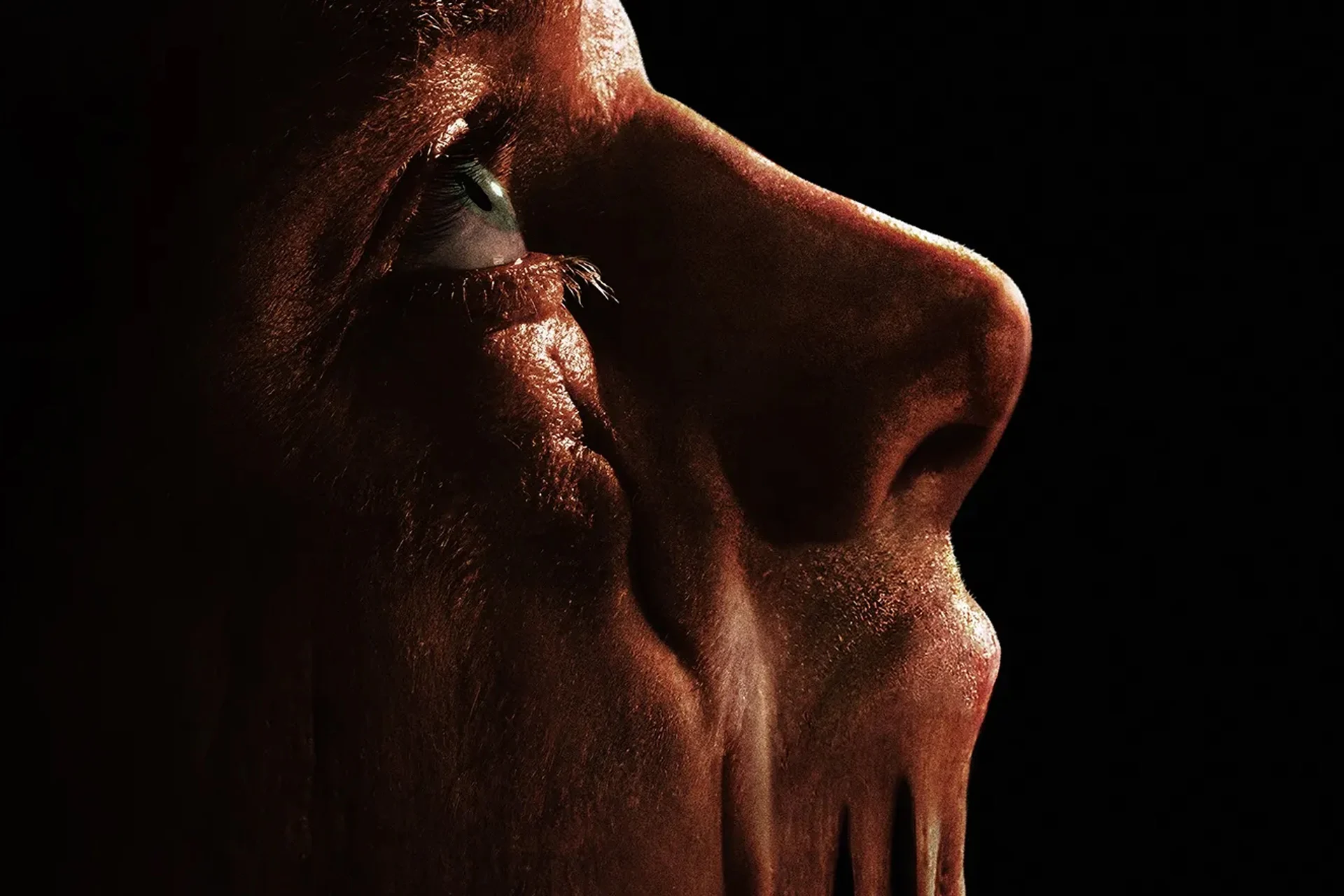
The tragedy of Clayface is the life and career he loses in pursuit of trying to become whole. The fantasy of Clayface is beating the crap out of people with enormous, spiky mallet-hands. The 2026 superhero movie “Clayface” is mostly adept at capturing the former, though it unfortunately relegates the latter to implications shoved off-screen. The film isn’t entirely bad — in fact, it’s quite enjoyable — but the more chances it creates, the more it fumbles them.
The co-existence of the character’s magnificence and misfortune have made Matt Hagen an enduring B-tier villain ever since his appearance in “Feat of Clay,” the two-part “Batman: The Animated Series” episode from 1992 (three decades after his comic arrival). So, James Gunn’s DC Universe granting him his own solo film is a goofy decision with no real downside; a $40 million supervillain oddity in the vein of ‘90s Dimension horror? Yes. Yes please, and thank you.
However, while the James Watkins-directed movie is choc-full of ideas — some of which it executes with aplomb — its numerous, flailing gestures toward a character torn between identities (and something, something A.I. something, something method acting) create a flimsy foundation. “Clayface” may contain more gore than your average studio picture, but its assembly ensures that while individual shots of Hagen (Tom Rhys Harries) slicing his own skin are extremely jolting, the cumulative effect of its sequences lacks a lasting emotional impact.
Hagen, an Oscar-nominated star, finds his face severely disfigured by a Gotham goon whose girlfriend he beds, forcing him to seek experimental treatment from well-meaning fringe scientist Dr. Caitlyn Corr (Naomi Ackie). A conversation between them hints at several themes with immense potential. In a key scene, Corr mentions injecting Hagen with artificially intelligent nanobots that can learn to impersonate living tissue. The actor, in turn, pokes fun at the spooky sound of an A.I. takeover, as though putting a pin in an obvious set-up, before claiming the nanites sound like they’re “method acting” — which is to say, the pop culture understanding of the process, involving staying in character for lengthy periods.
This is a great place to start, even if the film only seems to embody these broad ideas inadvertently. Neither one really comes up again. The nanites are established as technological exposition, while giving Corr an eventual dilemma over whether to have them self-destruct and kill Hagen when he goes off the rails. And the whole idea of losing yourself in or as another person is something frequently referenced, but it doesn’t actually occur in any meaningful sense until the movie’s final scene (a powerful button, for what it’s worth).
Along the way, “Clayface” plays out in the form of a prescriptive revenge drama, where the embittered Hagen slowly discovers the extent of his horrifying physical transformations, where he can both wear other people’s faces (and their voices; just go with it), in addition to gaining invulnerability and infinite contortion. These are useful tools in a city like Gotham, where everyone including your own lawyer is out to get you.
However, the themes of “method acting” and the pull-and-push of A.I. end up an accidentally vital part of how the film plays out. To put it simply, method acting involves tapping into instinctive sense memory (whether your own, or in the case of “method actors” who make PR-driven headlines, that of another character), though it’s really like working an unfamiliar muscle until using it feels second nature.
In the purview of “Clayface,” the movie’s plot creates exactly such a connection, via the inciting incident of Hagen’s face being sliced a dozen different ways. This is immediately followed by doctors trying to stitch him up in a particularly squelching, wince-inducing sequence that leaves him just as badly scarred. It’s also the film teaching you to watch and anticipate its most disturbing moments. As the nanite experiments return Hagen to his original appearance, these sounds and images linger in the back of your mind, and each time a blade ends up near a body — including and especially Hagen’s scissors, as he tries to cut off flesh that morphs between his eyelids — the sheer possibility of bodily harm turns the movie briefly into a rollercoaster.
Numerous scenes involve Hagen taking a razor blade to his own cheeks, whether to test his new abilities, or to perform some sadistic ingeniously complicated form of execution involving his own blood. Each time this happens, the film relies on (and draws from) the audience’s synaptic memory, forcing you to squirm and watch the screen through your fingers in anticipation of what might happen, rather than what does. It’s sense memory made manifest, forcing us to feel illusions as though they were completely real.
However, while many individual shots are adept at this, “Clayface” is far less successful as a work in totality. The sum of its parts adds up a whole lot less organically, with cutting and shot selection aimed more toward showing us what transpires at a distance, rather than using the aforementioned visceral moments to further draw us in. It’s a whole lot of “what” as the “how” and “why” subside, practically embodying the battle between human artistry and A.I. in the process.
Where an artist feels, and can reason, art “made” by A.I. is seldom more than rote impersonation, taking the most banal and familiar outward form of something real. This dichotomy is almost perfectly represented in every other scene, where moments of gut-wrenching, intuitive discomfort are strung together in ways that take you further away from the grisly action. The footage is neatly and robotically spliced into seemingly equal bits, as if by conveyor-belt, rather than chopped with the fury of a meat cleaver, which would be most befitting of body horror. In “Clayface,” individual shots are nerve-wracking, but the tensions dissipates over entire scenes,
This is by no means to suggest the film is edited by A.I. — such a retort against real, human-made art tends to be low-hanging fruit — but this thematic tug-of-war is hard to ignore, even if the film itself makes only brief mention of it, before sweeping it under the rug. Lost somewhere in the edit is a film about one man’s authenticity and how he gradually loses himself to raw emotions and unthinking impersonations — the real and the un-real, all at once — but his unfiltered feelings seldom come to the fore.
A brief, blink-and-you’ll-miss-it cameo by Aaron Paul as Hagen’s late, abusive father (who he briefly transforms into in a moment of rage) even hints at a larger tale of the way emotions affect him. When he first discovers his powers, they involve him being carried away by his love or hatred of other people until he becomes them, though he soon learns to control his abilities by… Well, he just does. He needs to, since this story exists in an IP-driven superhero world with few other possible outcomes.
However, the much more interesting route involves a version of Hagen who has to continue wrestling with these sensations, instead of having them be flattened until he generates smooth simulacrums. Whether “Clayface” likes it or not, it mirrors the very same existential battles being fought by artists today, against a world increasingly opting for inauthenticity, even though its most raw and affecting moments frequently clash with a similar artificiality. The pieces are all right there, ready for the taking, or rather, for the cutting.
Image credit: “Clayface”
This guest post is written by the best in the business, world class film critic Siddhant Adlakha.



Leave a Reply