
This guest post is written by Mara Franzen.
I first met Jason while LARPing in California two years ago. We hit it off and kept in touch to talk about books, table-top, and video games. I got to sit down and have a call with him recently about his studio’s newest release, “People of Note.”
Mara: Hello, Jason, thank you so much for agreeing to sit down with me and have this conversation, about your studio and your new game. Would you please introduce yourself?
Jason: Thank you for having me. My name is Jason Wishnov. I am the founder and Creative Director of Iridium Studios, and we just released our newest game, “People of Note” on April 7th.
I personally am very excited to play “People of Note.” I have had it wishlisted for a while, and I’m glad I can finally get my hands on it.
It’s exciting!
So before we talk about your game, I was hoping you could give our readers a little bit more insight into who you are. When did you start gaming?
That question to me, is similar to asking you know, when did you start breathing, or you know, walking or something like that? It might even be my literal 1st memory. It’s either seeing “Rock-A-Doodle” in theaters because I’m very old, or playing “Super Mario Bros.” with my mother on the original NES. My dad was also a gamer. He was really big into Atari and arcades and stuff like that. So he got me on it pretty young.
I fell in love with RPGs, and specifically RPGs from the East, from Japan. We’re talking about “Final Fantasy,” we’re talking about “Chrono Trigger,” “The World Ends With You,” and all these sorts of games, and I don’t want to say my personality was defined by those games, but in part, it was shaped by them. And I always wanted to try my hand to in some way continue the legacy of those games, and I am incredibly lucky and fortunate to have gotten that opportunity, and I have spent the last sixteen years making that happen.
You’ve been gaming your whole life, when did you know you wanted to make it your career?
Great question. I remember considering it in, like, middle and high school because that’s when you start to think about that stuff, you start to have a career counselor or whatever. And I did a little bit of research into it, and at the time, it did not seem very viable to me because these were very corporate structures. It wasn’t really something you could do on your own at the time.
You know, you had to buy these incredibly expensive dev kits from Nintendo and Sony. And you had to be licensed — you had to be a big company. And I realized that ultimately I think I would have been kind of a cog in the machine. I might have been a programmer, maybe a designer, but I wanted to make my own games and that just did not seem very viable at the time, and I sort of wrote it off.
Then I went to school. I went to University of Florida to get a couple of degrees in engineering. That’s when something interesting happened. 2007, 2008, 2009, that was the beginning of indie gaming as a general thing. There were some very early titles, “Raid” from Xbox Live Arcade, “Aquaria,” “World of Goo,” “Super Meat Boy,” and not only did those games come out and have some financial success, but we also did get new digital download platforms like Steam.
And there were contests that Microsoft was throwing at the time called Dream Build Play, which was to promote Microsoft XNA, a framework for making games. I wanted to see what was up with it. I started making my very first game, which was at the time called “Sequence.”
A lawsuit came about because there’s a board game called “Sequence.” Fun fact, don’t name your video game the same thing as a board game. I changed the name of “Sequence” to “Before the Echo,” and I ultimately won third place in Dream Build Play which came with a $5000 prize, which in today’s money, was like $10,000. So that was kind of a big deal and it really encouraged me to kind of see that game through to the end. I kept working on it privately on my own, just kind of like investing a little bit of that prize money back into it. Well, probably all of it back into it.
And, eventually, I was able to get really lucky and release it on steam, which back then hardly had any games on it. I mean, today, you might see 50 games get released in a single day. Back when my first game came out, there were usually only four new games in a week. So I definitely had an advantage by getting in a little early there, and that kind of kickstarted my career and it’s been full team ahead ever since.
Can you tell us a little more about what “Before the Echo” is about?
I remember I was a big “DDR” kid. I got my first job at an arcade, literally just so I could play that game for free. Then in 2007 a game came out for the Nintendo DS called “Puzzle Quest,” which was a Match-3 puzzle game combined with RPG mechanics. And I remember really loving the game. I thought to myself if you can combine a Match-3 puzzle game with an RPG, then you can probably combine anything with an RPG.
So with my deep love of “Dance Dance Revolution,” I said, can I add weird RPG mechanics on top of this? Which became “Before The Echo,” and you know it was my first game and to really look at it with a wide lens, it’s literally like a series of menus. Like, you don’t control a character you pretty much are in some menus and then you click through okay, I want to fight this enemy, and then, Dance Dance Revolution-like UI pops up. It was very, very basic in a way. But it was like a cool concept.
And like I said, when you’re only one of four games on Steam in a week, you get a lot of eyeballs on it, so it ended up selling pretty well. And I’m gonna tell you right now, like, for anyone [reading], I don’t think the writing holds up super well. I’m proud of the game, but I’m not necessarily proud of the writing. I was 22 or 23 when I wrote it, and looking back it’s not great. But, I think that’s part of developing as a writer. If you don’t look back at your old work and cringe, are you really getting any better?
If anyone’s out there who has played it, or you do play it from this interview, please be a little bit forgiving. It was my early work, and I’d like to say that I’ve gotten a lot better since then!
That’s hilarious. So you won this contest, had this game, when did Iridium Studios come about and become what it is today?
I mean it became a legal entity when the game came out because I suddenly realized I was making a profit. Honestly Iridium Studios has always just sort of followed me around and I’ve had three games, and I’ve had 3 different groups. I’ve always sort of used it as my company, and there’s really been three iterations of Iridium Studios, and then in between it always just kind of goes back to me. And even right now with “People of Note.”
I believe strongly that the games industry should be unionized. So I like to think about my game, like I would a union film crew. They get signed to the film. They come in, they do a film, they leave. For me I need breaks. If I make a game and it takes years of my life and I’m putting all of my passion into it, I can’t just keep going, I need a rest. I need to recuperate. That’s where my fresh ideas come from, that’s how I avoid burnout.
With “People of Note” I’m going to take half a year off or probably more. So, my whole team is actually rolled off already. And I told them that when they came on this was a contract job for the duration of the game. So Iridium Studios just kind of like rises and falls, like the tides.
Now, I’m sure this is shocking news, but there’s a lot of burnout in the video game Industry.
[Laughs] Yeah it is. I want to be clear, like, most of the game workforce right now is not unionized. So, in a way, I’m almost speaking about an ideal world that does not currently exist, and I have done everything I can do to help my team. Most of the people that have rolled off of Iridium Studios have found other employment in the industry, and are doing well and doing great work.
Can you tell us, what is “People of Note” about?
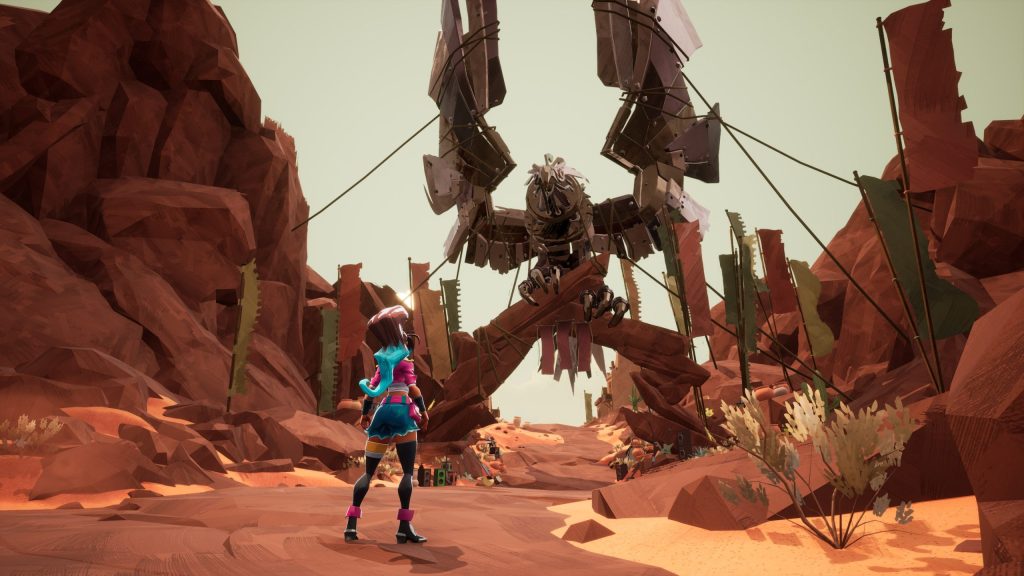
“People of Note” is a turn-based RPG musical, so it is as though you were playing a modernized version of your favorite Final Fantasy, except that every so often your characters are going to break out into song to express their feelings. To give a quick narrative overview, we start the game off with Cadence, an up-and-coming pop star in the pop city of Chordia. Every genre in the world of Note has its own city or country, instruments, everything. Typically they stay apart from each other. You know, the rock cities out there, but we don’t visit them, they don’t visit us. Cadence wants to win the Noteworthy Song contest to catapult her to fame and Stardom. But she runs into Councilman Sharp. He’s a corrupt manager of Smoulder, the most popular boy band. He’s kind of getting in her way of the song contest.
Eventually, though, she kind of gets it into her head that the only way she’s going to take home the prize is if she does something that no one in Chordia has ever seen before, she’s going out to these different nations to form a band of different people from different musical genres and combine them together. So, she begins her journey around the world of Note. You go to all these different places, the city of rock, the city of EDM, the city of rap, many other places I’m not going to mention right now for spoilers. And ultimately in doing so, she kind of gets embroiled in larger events. One nation is marching North to expand their territory, and there’s this rising tension. All she wants is to be under the lights, all she wants to do is perform her music, but larger world events are swirling around her and she needs to step up and take a larger moment of responsibility.
And the whole time, this is a classic turn-based RPG. This is truly an in-depth thing, there are very intricate systems, you’re building up custom loadouts, you’re loading in certain Song Stones which gives you abilities, and then you can change those up with Remix Stones. There’s a lot of complex tactical depth in the game, and the blooming of the mechanics dovetail nicely with the theming of the narrative. So, as the person who’s both a writer and the designer of the game, I do think you get a little extra bonus, and you can help each of those two things reinforce the other.
Let’s dive in, and chat a little bit about your newest release, “People of Note.” Can you tell me a little about your inspiration for the game and how it began?
I consider myself a theater kid, I love musicals. I sing showtunes constantly in public and all my friends are like, please stop, you’re embarrassing us, and I’m like, No. But specifically In 2017, Hadestown was touring and it was the big cultural phenomenon of the time. I did not see its original broader run, but it did tour in LA in 2017 for the first time. I went to see it and I was just like, blown away. And I just thought, I need to make a musical [game] right now because if I don’t, then every other game developer that sees this is going to make a musical first. “I gotta hurry up!”
That was, of course, nine years ago, so I didn’t go that fast. But it just got me thinking, telling a story through music has always been, and is currently still very common, like K-Pop Demon Hunters last year was a massive musical, and every Disney movie basically. This mode of storytelling is so common, and so powerful in all of these different mediums. I asked myself why? Why is gaming not applicable for that storytelling format?
There was one game that came out ‘98, called “Rhapsody,” that was a musical, but it was on PS1, and they didn’t have the technology to give vocal samples for the music, and it was little 2D sprites dancing around on the screen. So the technology really couldn’t get across a full musical. There just wasn’t anything out there, and I do think that people tend to overrate the importance of an idea. I think it really does come down to the execution, but you still want a fresh, cool, unique idea. It gets you excited to make the project, gives you a morale boost. At the time it felt like an incredibly fertile ground to make something new. I am happy to say that here at the end of this process, I still feel that way. I think it is a very cool, unique gaming experience that you really can’t get anywhere else.
You said earlier that you are both a writer and game designer on this game. Can you talk a little bit more about the more technical aspects of creating a game?
Every team is different. Sometimes when I play video games, and I’m like, “well, I have no idea how they did that. That looks impossible.” But for me as the writer and designer. I also was one of two engineers on the project. So I did get that kind of freedom where I can think of an idea or think of a scene, get to roll my sleeves up and get in there and make it myself. But the thing that I can’t do is make it look good, and I can’t make it sound good. I had an incredible art team and sound team supporting me.
We’re using Unreal Engine that’s provided by Epic Games, so a lot of the low level graphics rendering work, we didn’t have to worry about that. Of course, we pay a licensing fee to use that. Ultimately, we have an incredible group of talented artists who are specialists in their own right.
We had our art director managing the team, we had environment artists who were taking art by Jorge Gonzalez and turning it into wonderful 3D models that would then get placed by them or Tim Doolen into the engine for me to then place the scripting of the game. Where can you run through? Where is the camera? You hit “A” when you’re up to a lever, what happens?
Then we have our character pipeline. We have someone model it, then we have to have someone rig it which means putting digital bones that you can pose like an action figure. Then we give that off to the animators. There’s the gameplay animations, which are all handcrafted. Then there’s the cinematic, the fully animated musical numbers of the game. And that is actually much more akin to a traditional animation pipeline.
We’re using a motion capture setup, we’re polishing that animation, putting it into a scene, figuring out where the cameras are, lighting it, and then finally rendering it. We all kind of had to learn a little bit about, more of a film pipeline to create all of our musical numbers. Most of these teams were working simultaneously and helping each other out. I am very proud of how it all came together.
Can you talk a little more about the soundtrack for this game?
Obviously, sound is of paramount importance here. There’s two primary forks here, two paths that I want to go down. First is the gameplay music, which actually further diverges, so we have our standard songs, which plays when you’re running around. All video games generally have this. Our wonderful composer, Jimmy Hinson, did those songs.
But in battle, we did something special. I wanted the themes of gameplay to reflect the themes of the narrative. So when you’re forming a band of different genres, what ends up happening is that each turn of battle has a specific genre. In other words, this turn it might be rock, next turn it might be EDM, and the turn after that it might be pop. And on those turns, those characters gets boosts in power. So if it’s rocks turn, your rocker is gonna get a 50% boost to everything they do, and we wanted to reflect that. So, let’s say we’re in the Celtic forest. Each track is going to be a Celtic track, so we had to compose a special remix of each genre for that area. So now we have pop/Celtic, rock/Celtic, EDM/Celtic, and rap/Celtic.
But even beyond that, players can build up a special meter and unleash a super attack when those meters are filled, but to do that, you have to have two different genres that come together, AKA a mashup. So to do that, we had to support every possible combination of music genres. So we have to compose every single battle theme eleven different ways. Eleven different remixes to support every possible combination. It is unlikely that anyone is going to hear all of them, because you might have specific mashups that you want to do, or you might really prefer one character over another. But, we had to make all of them, because we don’t know what players are gonna do! That was an unbelievable effort that somehow Jimmy Hinson(Big Giant Circles), primary gameplay composer, managed to do. He is so multi-talented, he is so incredible.
That’s just one half. The other half is a musical number, it is a musical after all! We had our primary composer, Jason Charles Miller, an incredible musician. He comes from a pop, rock, and country background, and he handled I want to say eight of the songs. I helped with lyrics just because I’m the writer of the story. Though ultimately these composers were working for him. We have an EDM musical number. You have a Classical, fifth element homage musical, and for these we kind of reached out to specialists. We really looked around for incredible artists that could do those particular genres justice, and to figure out what would an EDM musical even sound like?
And finally, the last piece of that puzzle were our singers. We wanted to cast amazing singers, and actors, because they’re doing both. In a lot of cases, we found the perfect mesh of both to an incredible level. In other cases, I really fell in love with one audition for acting, but I really fell in love with another for singing. We ended up doing a split cast, which I initially was worried about, but we found people who really could sound like each other. I was actually looking up about [split casting], and movies do it all the time. The Hercules actor was different from the Hercules singer. I think “Lion King” did something similar. So, it wasn’t as uncommon as I had originally thought. All of our singers did such an incredible job giving it all to these musical numbers that I think everyone when they hear them, they’re gonna be like damn, this is this is this is fire.
“People of Note” is officially out on Steam, so what does it mean to you that it’s like finally out there, and that people can just play it?
I mean, it’s scary, but it’s also incredibly gratifying. I think gaming might take the longest of anything to produce on average. Even a movie, in theory, is shot in like six-nine months and then there’s post-production for movies. But you know six years of your life it’s kind of staggering to think about. And almost the whole time you’re keeping it a secret. You don’t share it with the world. Only in the last six months has it even been announced. It almost feels like you’ve been in a cave for all this time, and then suddenly it’s out there and it’s like your baby, you’ve been very protective of it, and you’ve been very precious about it. Now, I feel like a parent sending a child off to college or something like that. But I couldn’t be more proud of it.
In the gaming industry right now, if you’ve been paying attention, there are many stories of games getting canceled or meddling executives coming in. But I got to tell you, like, that really didn’t happen with “People of Note.” I think if I showed this game to myself 6 years ago, when my previous self looked at it, he’d be like, “dude, you did it. I can’t believe it, but that’s the game I wanted to make.” And that doesn’t mean that it came out exactly as I had envisioned it, but it’s still true to all the things I wanted to do with it.
So, no, I couldn’t be more proud of it, not just for my own perspective, but for the team, for everyone that worked on the game, of which there are many dozens. They all did such an incredible job. I don’t know how it’ll sell, that’s beyond my ability to control obviously but I hope that the people who play it find something really special there, and it affects them in a meaningful way, because as an artist that’s really all I’m going for is to try and affect people’s lives for the better. To make something that makes them feel, that makes them laugh, it makes them smile, and I’m doing it! I’m really excited for it to be out there.
What were the key takeaways you learned from this process that’s going to stick with you?
You really have to trust in your team, especially the people who are in charge, like Tim, my Art Director, and Jimmy, my Audio Director, they know better than me in their specific areas. I’m not an artist, I’m not a musician, and I’m not a producer with a lot of experience in the music industry. I’m not good at spreadsheets, for instance. I think as a Creative Director, you want to have your hands on everything, you want to control everything because you have a strong vision. But that’s only going to get in the way of them doing their jobs, and they through their own experiences will be able to bring something to your project that you did not even think about or that you never conceived of.
I’ll just give it a quick story. My friend, Isla, who actually helped me out with motion capture, at one point got a glimmer in her eye, and asked “what’s the money in the world called? Like, what’s the currency?” And I was like, “I don’t know, probably gold or whatever.” She said “alright, what if it was called groove? And at some point, someone steals it from you, and then you have to go get your groove back.” I was like, that’s brilliant and now that’s part of the game where there’s a side quest where you have to go do that. I think it just hits so hard, and it’s such a silly idea, but, I don’t think I would have ever thought of that.
Letting your team contribute to the game and trusting them to make the right call is a fine line because I’m the Director, I still have to say no and say yes sometimes. But, just trusting them and giving them autonomy, it’s hard to do, but it makes the game so much better.
Can you give us any other little sneak peaks into what people can expect from the game?
I believe very strongly in players playing how they want to play. And so in my game, there are RPG term-based battles, you can take your time, there’s no rush! It’s not an action game, but it might be stressful. On the other side, there’s puzzles. As you’re going through these various areas, there’s environmental puzzles, you’ll be rolling logs and opening geysers, doing all kinds of stuff.
But, you know, bowling alleys offer bumpers, and if you like bowling you probably don’t use them, but they’re there. In my game, if you do not want to do puzzles, or you do not want to fight things, my game very clearly gives you the option to turn them off and skip them. If you turn off puzzles the environment kind of arranges itself in such a way where you don’t need to solve them, or if you’re skipping battles, you can just instant right from a menu. You could also turn those off and on throughout the gaming experience. So you can start trying it out, maybe it’s not to your type and you could turn it off.
Heck, you could even turn it on back later if you change your mind again. I recommend that you play with everything on of course, we put a ton of work into making these systems fun and exciting and engaging, but I’m not here to tell you how to live your life or play my game. Just know that you have a lot of control, you have a lot of customizability about how you play the game. And also, in Archaia, make sure when you get to the central plaza, turn left! There’s a nice treasure chest in the snow and there’s going to be a good thing for you.
Jason, thank you so much for sitting down to talk to me about your game, and to tell our readers all about it. Do you have any final thoughts you want to say about running a studio, or People of Note?
My end credits, which, of course, are themselves a musical number, the chorus is no one can do it alone. Except maybe Toby Fox who made “Undertale,” he can do it alone, but no one else can do it alone.
Collaborative work, finding a team, sharing your passion. I think it is one of the best things in life. I think working collaboratively is so wonderful. I encourage everyone whether it’s a paid, part of your job or not. Get into that, maybe find some game jams around you, get that bug. Nothing makes me feel more alive. I mean obviously I hope you check out “People of Note,” but the creation itself is one of the most satisfying things in the world. So if anything, I hope that “People of Note” can inspire people to do that, take that step with their lives because, for me, it’s what gives my life meaning, and it’s so very, very valuable.
What a perfect note to end on, Thank you so much Jason for joining me and I hope you all check out “People of Note”now.
“People of Note” is available on PC.
Image credit: “People of Note”
 Video Game Town