
This guest post is written by Tiago Svn.
A few very famous video game staples likely still exist because developers either fear a dumb but real backlash for getting rid of them, or because they’ve coexisted with them so long that they cannot imagine a video game world without them. This time, I’ll be trying to dispel the notion that health bars are useful and fun.
When “Hollow Knight Silksong” came out, it was met with critical acclaim on all fronts but one. Though only a small subset of fans complained, they made enough noise for a lot of people to realize that the game’s most protracted enemy encounters suffered greatly from not displaying health bars for its enemies. I immediately agreed with the argument. It really sucks for players to invest a lot of time in a boss that never informs them just how close to progressing they are. This way, instead of hyping up players by informing them that they’re getting ever closer to triumph, it has them feeling like a sleep 2D version of Sysyphus trying to outdo a mountain in physical combat.
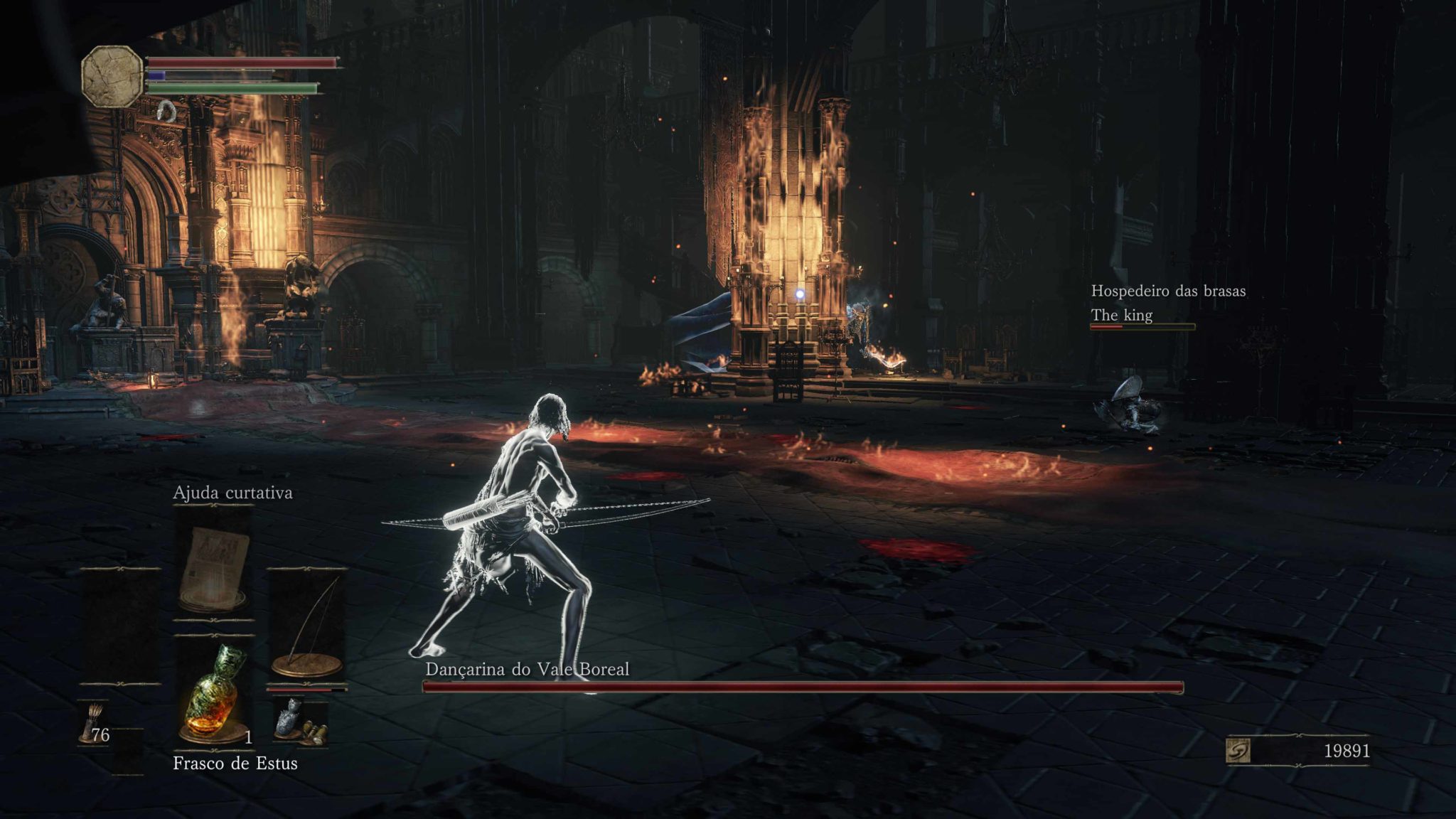
Throwing a “Dark Souls” boss encounter because the monster is one hit away from perishing and you go for a miscalculated heavy hit will prove incredibly frustrating, but it’s both a lesson and the kind of canon event that the entire community can laugh about together later. “Silksong” doesn’t have that, which sucks, but we should already be getting better than a hit point indicator on a screen, anyway. I’d posit that the real problem isn’t the lack of a health bar; it’s the lack of any sort of progression indicator, which devs can now achieve in awesome diegetic ways. Show the boss gradually losing their armor as it meets the might of our hammer, show bruises on their skin, have them cussing at the player with a voice that goes from light-hearted to panic-stricken, show them bleeding uncontrollably.
I get that this might sound completely mad when read out of the blue. Few things in games are more iconic and effective at making players realize shit is real than the appearance of a massive health bar underneath a guy named BOSS. Though you might no longer realize it, the popularity of boss encounters was at an all-time low by the early 2010’s, when some big video game outlets went so far as to call them “A relic of a bygone era”.
Sadly for them, “Dark Souls” was about to come out and either prove naysayers entirely wrong, or create a path for gaming where boss battles really had a place, a path that ended up becoming the industry standard. Even if we can, and should, do Souls bosses without health bars, health bars in Souls bosses are iconic, and I’d never criticize the series for using them solely by virtue of it having saved boss battles, but I can’t help but to feel like any big-budget game making use of a health bar — or not using one at all without even bothering to include any other sort of health indicator — feels like someone’s skipped an important step when maximizing the fun one could get out of a battle.
And the really cool thing is that there are so many awesome alternatives to showing a bland and overdone health bar that requires you to shatter the immersion by looking away from the action. “Call of Duty” games have created great low-health indicator alternatives such as showing the character’s heartbeat surging, having the screen turn grey, or being completely covered in blood. It’s even easier in third-person perspective games, where you can see big cuts on every character to gauge just how close they are to biting it.
This would prove great even for games that get crap for not featuring great enemy variety. Enemies that show how close to dying they are in different manners all look different enough as to suspend the notion that you’re playing inside a repetitive simulation, but the industry simply isn’t taking steps in that direction. Some big games, like the “Assassin’s Creed” series, are even devolving in that aspect. You can now see horrid health bars that used to be so beautifully invisible in the first games of the series. And sure, the series has shifted a bit from more realistic combat to something more akin to an RPG, but do RPGs really need that? The most beloved “Final Fantasy” are, coincidentally perhaps, but still the ones that don’t feature health bars.
And, even if with all that you still like health bars in your games, I must ask: are health bars even really serving their originally intended purpose, or have they mostly lost all of their meaning and functionality a long time ago? Is it possible that they currently remain just because of the cool memories we associate them with?
Most games where you fight bosses with the classically large HP bars rarely even show us how far we are into the vanquishing of our toughest foes, as depleting one of these bars will likely just reveal yet another “final” form. That’s true to pretty much every game in the Soulsborne series, where zeroing a big boss’ health bar will more often than not feel like a cruel joke as you see it getting immediately growing wings and drawing an even larger sword, this one made out of wasps.
And what’s funny is that a great alternative is actually in Souls games themselves, with bosses like Sif and the Old Demon King that reveal their health decline in alternative ways that are equal parts immersive and heartbreaking.
To think we could’ve had that from every boss encounter in most games…
Diegetic health indicators are an example of an advance I believe the games industry would’ve benefited from long ago, one that would greatly elevate the immersion provided by most games, but that is nowhere near becoming standard for reasons I don’t understand. Are there many other examples out there of mechanics you think games should become the norm? I’d love to hear it.
Image Credit: “Dark Souls III”
Leave a Reply