
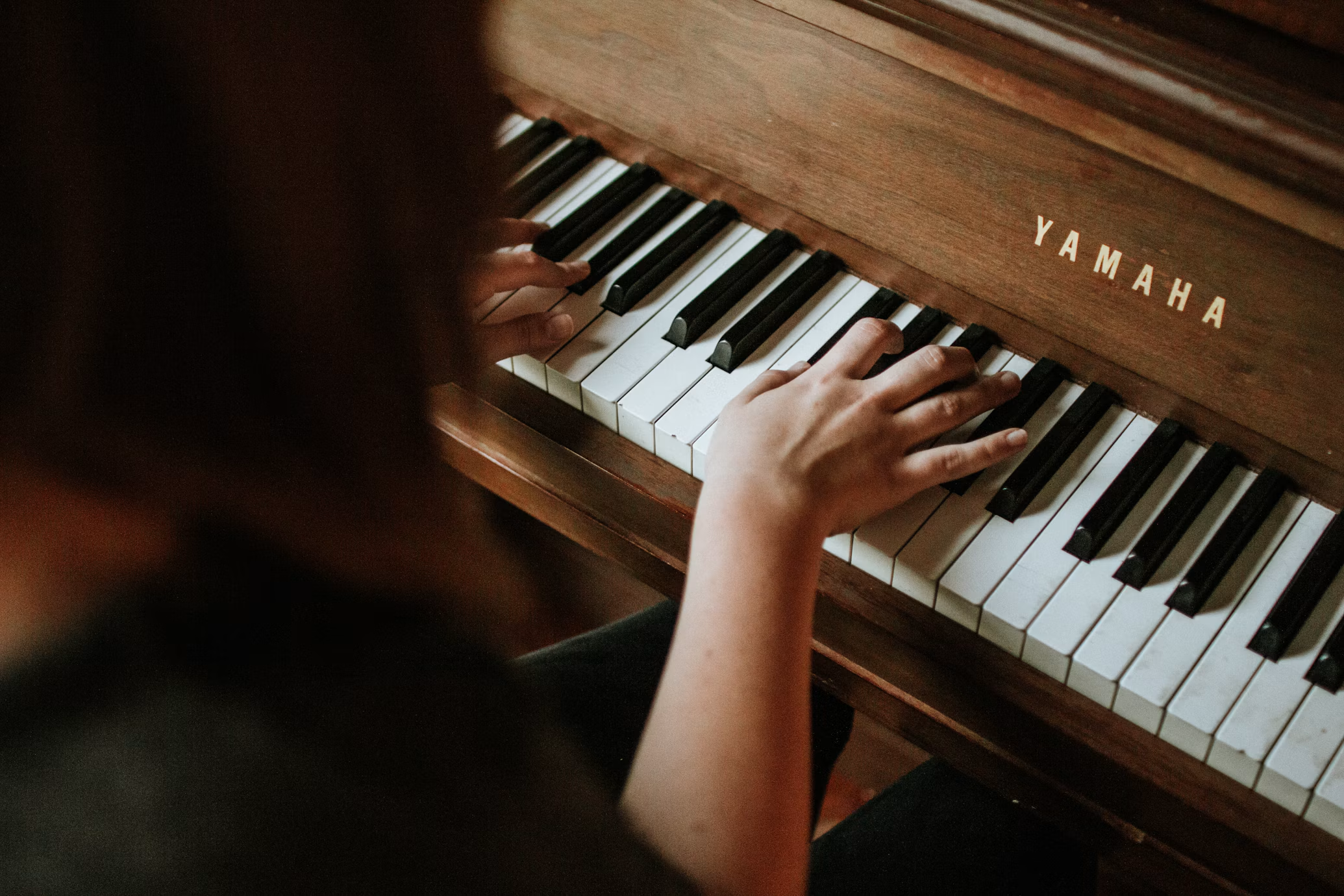
This guest post is written by Felix Lilly.
I was playing piano at a mall when I got into a conversation that led me to propose a concert at a retirement community. I’d gone to the mall with no plans to book a performance. I saw a piano and sat down. By the time I got up, I had a reason to think about what I might play for an audience I hadn’t known existed.
I’ve played piano and sight-read music for more than 25 years. If I sit down with a score I’ve never seen, I can usually look ahead far enough to get through the next phrase while my hands are still playing the current one. I also know what to do when I lose my place. That may be the more useful skill at a mall. If I miss a note, I can keep the rhythm going and find my way back in. Someone passing with a shopping bag may never hear the mistake.
That’s the advantage I bring to a piano anybody can play. I can see an empty bench and sit down before I’ve even decided on a piece. Someone with six months of lessons might have one piece they know all the way through at home. At the mall, they’d have to find out whether they still know it while a stranger stands close enough to watch their hands.
When I say playing the mall piano tends to go to people who know what they’re doing, I mean something more specific than being good at piano. I mean knowing enough to begin in public without being sure how it’ll go. Twenty-five years at the instrument have given me ways to get through an awkward moment that a beginner is still learning. The bench is equally empty for both of us. I probably need less time to decide whether to take it.
Even for me, choosing what to play there feels different from choosing what to play at home. A person walking past may hear only the middle of a phrase. They won’t know what I had to do to get there, and they may be out of earshot by the time it resolves. I can play something with a long build and trust that a few people will stay, or
I can choose something that makes sense to a listener who catches it halfway through. The people who stop get to decide how much of their day to give me. That’s part of what I like about playing there.
It’s also where the mall has a say. Somebody decides where the piano goes, and its placement can change the experience before anyone strikes a key. A bench facing a walkway puts the player in view of everyone coming toward it. A piano off to the side leaves a little room to try the first few measures without feeling as if you’ve announced a performance. And if a player stays for a long time, somebody has to decide whether to let them finish, ask them to make room, or leave the next player to work it out. I know what it feels like to be the person at the keys. I’d like to hear what those moments look like to the people who work within earshot.
I’d also like to hear from a pianist who walked past an empty bench before eventually sitting down. I’m curious what changed. Maybe they finally had something they wanted to play in front of people. Maybe they heard another player stop and start over and realized the mall could survive a false start. I’ve spent so long learning how to keep playing through a mistake that I can forget how much it matters to hear someone else make one and carry on.
The conversation about the retirement community gave me another way to think about what happens around the bench. I’d sat down because I already felt comfortable enough to play in public. The person I met had a reason to think about people who might enjoy hearing a pianist where they lived. Without the piano sitting there, I doubt we would have had much occasion to talk. A performance I hadn’t planned gave us something specific to discuss, and by the end of it I was thinking about playing in a room I’d never been in.
I still enjoy being able to sit down at the mall and play a little Mozart. I’ve put years into learning how to read music and how to recover when I get ahead of myself. I’m glad there’s somewhere I can use that experience for a few minutes on an ordinary day. I’d like to know what would make that same bench feel available to somebody whose favorite piece still has a measure they can’t get through. I can usually get past my difficult measure without anyone hearing it. I wonder what would happen if the next person felt free to stop and try theirs again.
Image credit: Jordan Whitfield



Leave a Reply